

How Often Should Commercial Properties Have Trees Professionally Pruned?
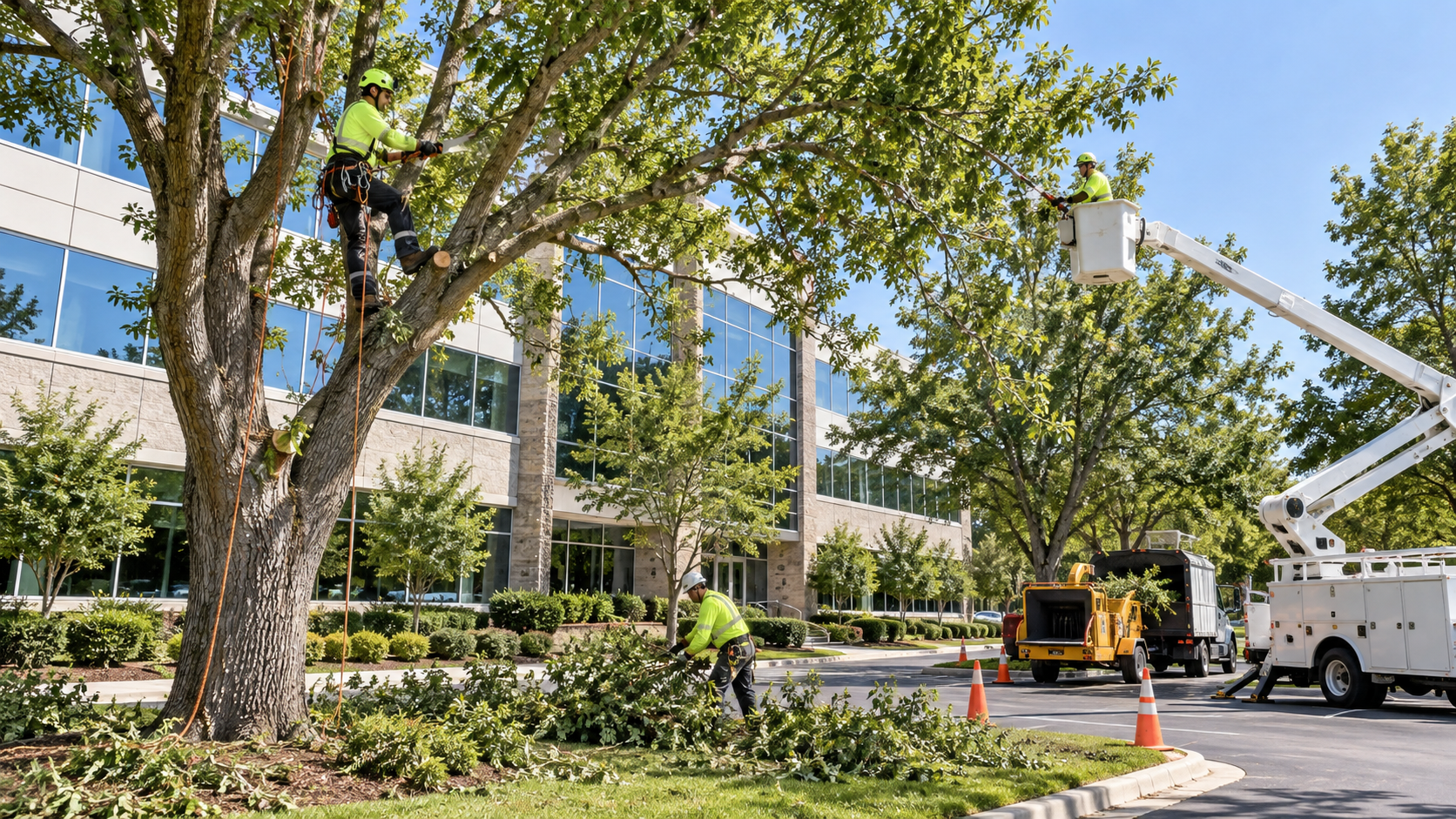
Trees add real value to commercial properties. They shade parking lots, soften buildings, and make office parks, retail centers, and HOA communities more inviting. They also come with responsibility, because a falling limb on a sidewalk or parking lot can injure someone or damage a vehicle.
Property managers often ask how often trees should be pruned to keep them safe and attractive without overspending. The answer depends on the trees, the site, and how people use the space around them.
Quick Answer: Most trees on commercial properties should be professionally pruned every 1 to 3 years, with younger and fast-growing trees on the shorter end. High-traffic areas such as parking lots, entrances, and sidewalks may need annual inspections and clearance work. Dead or hazardous limbs should be removed as soon as they are found.
Why Does Pruning Matter More on Commercial Properties?
Commercial sites see far more foot and vehicle traffic than most homes. Customers, tenants, residents, and employees walk under trees every day, which raises the stakes when a branch weakens.
Regular pruning also protects the property itself. Limbs that rub against roofs, block signage, or crowd lighting can cause damage, reduce visibility, and create security concerns. Overgrown trees are a common cause of roof and gutter problems on buildings of every size.
What Is a Typical Pruning Schedule for Commercial Trees?
Most trees benefit from pruning every 1 to 3 years, depending on species, growth rate, health, and how close they are to buildings and walkways. A practical schedule usually looks like this:
• Young trees: every 1 to 2 years for structural pruning that shapes strong growth.
• Mature trees: every 2 to 3 years for deadwood removal, thinning, and clearance.
• High-traffic areas: annual inspections, with clearance pruning as needed.
• Hazard limbs: removed promptly, at any time of year.
Regular safety inspections for mature trees help adjust the schedule over time, since some trees need more attention as they age.
What Factors Change How Often Trees Need Pruning?
Species is one of the biggest factors. Fast-growing trees can quickly crowd buildings and lights, while slower-growing trees may go longer between visits.
Location matters too. Trees beside parking lots, drive lanes, and entrances need clearance for vehicles and pedestrians, and many municipal codes set minimum clearance heights over sidewalks and streets. Trees near power lines may also require coordination with the utility.
Tree health plays a role as well. Trees with disease, storm damage, or structural defects may need more frequent care, and some may eventually need removal instead of pruning.
When Is the Best Time to Prune Commercial Trees?
Late fall through early spring is generally the best time for routine pruning, when most trees are dormant and their structure is easy to see. Dormant-season pruning also tends to cause less disruption on busy sites, since foliage and outdoor activity are reduced. In this region, the best time to trim trees in northern Illinois follows the same pattern.
Oaks need special care. University of Illinois Extension notes that oak wilt is at the highest risk of spreading during April, May, and June, so routine oak pruning is best postponed until the dormant season. Properties with many oaks should plan around oak wilt every year.
Can Regular Pruning Reduce Storm Damage and Liability?
Yes. Removing dead, weak, and overextended limbs before storm season lowers the chance that wind or ice will bring them down. Thinning dense canopies can also reduce wind resistance. Over time, regular trimming can prevent storm damage that would otherwise lead to emergency calls.
For property managers, a documented maintenance schedule also shows that trees were cared for responsibly. That record can be valuable if a tree-related incident ever leads to an insurance claim or dispute.
How Should Property Managers Plan Tree Maintenance?
Start with an inventory of the trees on site, noting species, size, location, and condition. Group trees by priority, with high-traffic and high-risk areas at the top.
From there, build a multi-year plan that spreads pruning across seasons and budgets. Many HOAs and commercial sites prune one section of the property each year, so every tree is covered on a regular cycle without a single large expense.
Frequently Asked Questions
How often should HOA trees be pruned?
Most HOA trees should be pruned every 1 to 3 years, depending on species, age, and location. Trees along sidewalks, streets, and common areas may need yearly inspections and clearance work.
What is the best time of year to prune commercial trees?
Late fall through early spring is generally best for routine pruning because most trees are dormant. Hazardous limbs should be removed whenever they are found, regardless of season.
Can pruning reduce liability on a commercial property?
Regular pruning removes dead and weak limbs that could fall on people or vehicles. A documented maintenance schedule also shows the property owner took reasonable care of its trees.
Should oak trees be pruned in spring?
Routine oak pruning should be avoided in spring and early summer in Illinois because of oak wilt risk. Dormant-season pruning is the safer choice for oaks.
Is it better to prune all commercial trees at once?
Not necessarily. Many properties use a rotating plan that prunes one section each year, which spreads out costs and keeps every tree on a regular cycle.
Conclusion
Commercial properties should generally have trees professionally pruned every 1 to 3 years, with more frequent inspections in high-traffic areas and prompt removal of hazardous limbs. A planned, rotating schedule keeps trees healthy, reduces storm damage, and supports a safer property.
Sawvell Tree Service provides commercial tree care for municipalities, townships, HOAs, and property managers across northern Illinois. If you manage a property with trees, request a free estimate to plan a maintenance schedule.