

How Do Overgrown Trees Impact Roofs and Gutters?
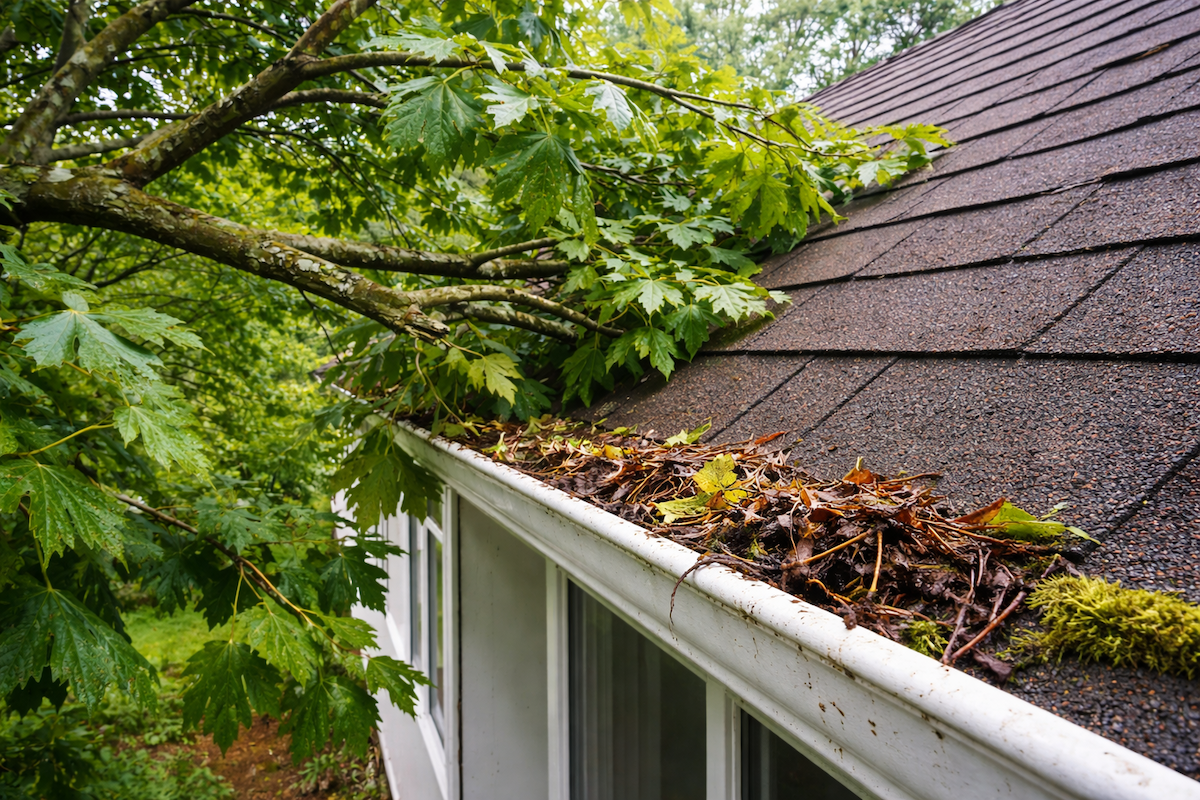
A large tree close to a house is one of the most desirable features a property can have. Shade in summer, privacy from neighbours, wildlife habitat, and genuine aesthetic value are all real benefits that established trees provide. But when those trees are not maintained, the relationship between tree and house can become a costly one. The damage tends to build slowly, and homeowners often do not notice it until it has been accumulating for years.
Roofs and gutters are the structures most frequently affected by overgrown trees, and the damage pathways are more varied than most people expect. It is not just about a branch falling through a roof in a storm, though that is a real risk. It is also about the slower, ongoing effects of constant contact, leaf accumulation, and the moisture environment that an overhanging canopy creates. Understanding these mechanisms helps homeowners identify the problem earlier and take action before the damage becomes expensive.
Quick Answer: Overgrown trees impact roofs and gutters in several ways. Branches in contact with roofing materials cause abrasion damage over time. Overhanging canopy keeps the roof surface permanently damp, accelerating moss, lichen, and algae growth that degrades shingles and tiles. Gutters fill with leaves, twigs, and seeds that cause blockages and overflow. In storms, heavy or weakened branches can fall and cause direct structural damage. Root systems can also affect drainage infrastructure and foundations in properties with older or shallow-laid systems.
Abrasion and Direct Contact Damage
The most straightforward form of damage from overhanging branches is physical abrasion. When a branch rests on or regularly sweeps across a roof surface in wind, it acts like sandpaper on the roofing material. Asphalt shingles lose their protective granule layer at the point of contact, which reduces their effective lifespan and eventually exposes the underlying layer to water ingress. Tiles can be cracked or dislodged by persistent branch pressure, and any coating applied to a flat roof surface will be scratched and worn away.
This damage is often first noticed during a roof inspection rather than by the homeowner. By the time it becomes visually obvious from the ground, significant degradation has already occurred. The branch does not need to be in constant contact to cause this; even intermittent contact during windy conditions, applied repeatedly over months and years, produces meaningful wear.
Moisture and Biological Growth
A canopy that overhangs a roof keeps the roofing surface in shade for extended periods and slows the drying of rainwater on the surface. On a well-exposed roof, rain dries relatively quickly between showers. On a shaded roof beneath a tree canopy, the surface stays damp for longer after each event and dries less completely between events. This sustained moisture creates ideal conditions for moss, lichen, and algae to establish and spread.
These biological growths are not purely cosmetic problems. Moss holds water against the roofing surface, extending the period of moisture contact and eventually causing accelerated degradation of the material beneath. On tiled roofs, moss can physically lift tiles as it grows beneath their edges, breaking the weatherproof seal and opening pathways for water entry. Lichen produces organic acids that etch into masonry and some roofing materials over time.
Regular canopy management that keeps branches from overhanging the roof surface is one of the most effective preventive measures against this type of damage. How regular trimming prevents storm damage extends to this kind of slow ongoing damage prevention, not just the dramatic event of a branch falling.
Gutter Blockage and Overflow
Gutters are designed to channel roof runoff away from the building, and they perform this function well when they are clear. A tree directly overhanging a gutter delivers a continuous supply of material that the gutter system is not designed to handle: leaves, twigs, seeds, flowers, sap, and bark fragments accumulate in the gutter channel, reducing flow and eventually causing blockages.
When a gutter blocks, rainwater backs up and overflows at the nearest low point. That overflow typically runs down the fascia board behind the gutter, along the top of the wall, and into the junction between wall and roof where it can access the interior of the building. Over time this causes rot in timber fascia and rafter ends, water staining and damp penetration into the wall below, and in more serious cases, structural decay in the roof timbers themselves.
Cleaning gutters once or twice a year is a reasonable maintenance task for a house without significant overhanging trees. For a property with large deciduous trees directly above the gutters, the accumulation can be severe enough to require cleaning after every significant weather event. The longer-term solution is reducing the canopy to a clearance that significantly reduces what falls directly into the gutter.
Branch Failure in Storms
The most dramatic form of roof and gutter damage from trees is direct branch impact, and it is the form of damage most likely to require emergency response. Large branches or whole trees that fail in wind or under snow load can cause catastrophic damage to a roof in a single event. Early signs of internal tree decay are worth knowing because internal decay significantly increases the risk of branch failure without any external warning.
Not every tree that looks healthy from the outside is structurally sound. An arborist's assessment can identify internal issues before they result in a failure. How to know if a tree is structurally hazardous covers the specific signs and assessment methods that identify trees at elevated risk of failure.
Root Damage to Drainage and Foundations
While roofs and gutters are the most immediately visible areas of impact, overgrown trees can also affect the property below ground. Tree roots grow toward available water and nutrients, and where drainage infrastructure provides both in abundance, roots will infiltrate it. How to tell if tree roots are damaging your property covers both the above and below-ground dimensions of this problem.
Older clay drainage pipes and modern plastic pipes with poor joint seals are particularly vulnerable to root ingress. Once roots enter a pipe they grow rapidly within the water-rich environment, eventually causing complete blockage or structural fracture of the pipe. The remediation of root-damaged drainage can be costly and disruptive, particularly where pipes run beneath paved areas.
Warning Signs That Action Is Needed
Several signs suggest that an overgrown tree near the house has begun causing or is at risk of causing property damage. Any homeowner who observes these should arrange a professional assessment without delay.
Visible moss or lichen growth extending from the area directly beneath the tree canopy onto the roof surface is an early indicator of the moisture problem. Gutters that overflow in moderate rain despite appearing reasonably clear may be blocked further along. Granule deposits from asphalt shingles appearing in the gutter or on the ground at the downspout outlet suggest abrasion is in progress. Cracks or staining on the fascia board below the gutter suggest water overflow has been occurring for some time.
Frequently Asked Questions
How close to a house is too close for a large tree?
There is no single universal answer because it depends on the species, the tree's size and growth rate, and the direction the canopy extends. As a general principle, no significant branches should overhang the roof surface or reach within three to four feet of the gutters. A tree whose trunk is within ten feet of the foundation warrants monitoring for root activity in drainage lines.
Can I cut the branches overhanging my neighbour's tree myself?
Property law on this varies by location, but in most cases you have the right to cut back branches from a neighbour's tree to the property boundary. However, this should be done by a qualified professional both for safety and to ensure the cuts are made correctly without causing unnecessary damage to the tree. Always notify your neighbour before carrying out such work.
How often should I inspect my gutters if I have overhanging trees?
At minimum twice a year, typically in late autumn after leaf fall and in late spring. If you have fast-dropping trees such as sweet gum or heavily seeding trees directly above the gutters, more frequent checks are sensible. After any significant storm, a quick visual check of gutter flow during or after rain is a useful early warning system.
Will my home insurance cover tree damage to my roof?
Most standard homeowner policies cover damage caused by a fallen tree or branch, but coverage typically requires the damage to be sudden and accidental rather than the result of gradual wear or known neglect. If an arborist or tree service has previously flagged a tree as hazardous and no action was taken, a claim related to that tree may be disputed.
What is the best way to prevent tree-related roof damage long term?
A combination of regular canopy management to keep branches from overhanging the roof, annual gutter clearing, and periodic arborist assessments to identify trees developing structural or health issues before they become a problem. Prevention is considerably less expensive than remediation.
The Bottom Line
Overgrown trees cause roof and gutter damage through multiple pathways, most of which develop slowly enough to be caught and addressed before they become expensive. Regular tree maintenance and an attentive eye on the roof and gutters are the most practical combination of defences.
Sawvell Tree Service provides trimming, crown management, and hazard assessments for residential and commercial properties across the North Shore area. If you have trees overhanging your roof or gutters, get in touch to arrange a review.