

What Are the Early Warning Signs of Internal Tree Decay?
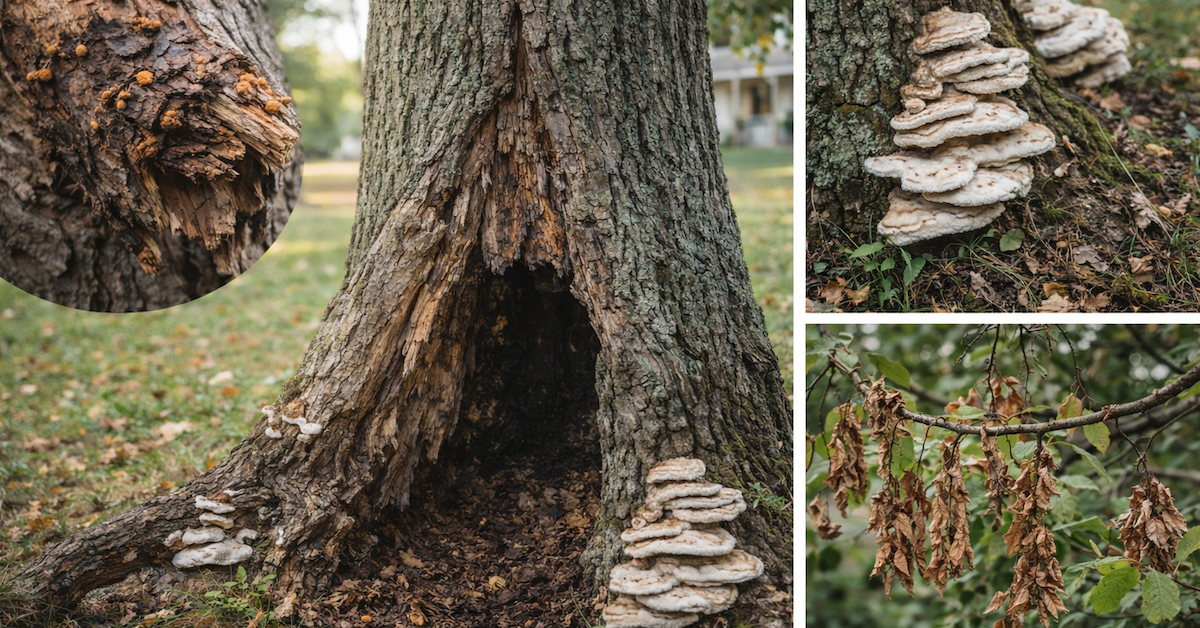
Internal tree decay can develop long before a homeowner notices visible damage. Trees often hide problems within the trunk or branches, and by the time the decay becomes obvious, the tree may already be structurally weak. Early detection is important because it helps prevent falling limbs, trunk failure, and costly property damage. A tree with internal decay can sometimes be saved, but only if the warning signs are recognized early enough.
Understanding what to look for helps you protect both your landscape and your safety. Even trees that appear healthy on the outside can have significant issues beneath the bark, so learning the early signs is one of the best ways to stay ahead of serious hazards.
Quick Answer: Early warning signs of internal tree decay include soft or spongy wood, fungal growth at the base, cracks in the trunk, dead branches, hollow sounds when tapped, and areas where the bark is missing or peeling. These symptoms often indicate that the interior structure is weakening even if the outer appearance still looks normal. Identifying these issues early allows you to take action before the tree becomes dangerous.
Soft or Spongy Wood on the Trunk
A healthy tree trunk feels firm when pressed. If the wood feels soft, crumbly, or spongy, it can be an early sign that decay has developed inside the tree. Soft areas usually indicate that fungi have begun breaking down the interior tissue. Even if the soft spot appears small, it can point to a much larger internal problem that is not visible from the outside.
Testing the trunk gently with a tool or tapping lightly can help identify unusual soft spots, but a professional arborist can confirm the extent of the decay safely.
Fungal Growth Around the Base of the Tree
Mushrooms, shelf fungi, or fungal conks growing around the base of a tree often signal internal rot. Fungi feed on decaying wood, which means they only appear when the tree is already compromised. The presence of these growths does not automatically mean the tree is beyond saving, but it does indicate that the interior structure should be evaluated as soon as possible.
The type, size, and location of the fungus can help professionals determine how advanced the decay has become.
Cracks or Splits in the Trunk
Cracks and splits often develop when internal wood fibers weaken. As decay spreads, the trunk loses its ability to support weight or resist strong winds. Vertical cracks, horizontal splits, or deep wounds that do not heal properly can all be signs that the tree’s structure is failing.
These cracks may grow worse during storms or heavy snow, making the tree more likely to break. Identifying these issues early can prevent sudden and unpredictable tree failure.
Dead or Dying Branches in the Canopy
When the interior of the tree begins to decay, the upper branches may receive less water and nutrients. This often leads to dead or dying limbs. If you notice that certain branches lose leaves earlier than others or fail to produce new growth in spring, it may be connected to internal decay.
Dead branches can fall at any time, so they are both an early warning sign and an immediate safety concern.
Hollow or Echoing Sound When Tapped
Tapping lightly on the trunk with a tool can reveal hollow areas. A hollow or echoing sound usually means that internal wood has decayed and air pockets have formed. Trees can sometimes remain standing even when hollow, but the structural integrity is often compromised.
Only a trained arborist can safely evaluate how much strength the tree has lost and whether removal or treatment is needed.
Missing or Peeling Bark
When decay affects the vascular system of the tree, the bark may begin peeling or falling away. Large sections of missing bark can expose soft, discolored wood underneath. This is often a sign that decay has reached a more advanced stage and that the tree is losing the ability to transport nutrients effectively.
A healthy tree continually replaces its bark. When the bark stops regenerating, internal issues are usually present.
Sunken or Swollen Areas on the Trunk
Swelling or depressions on the trunk can indicate that the tree is reacting to internal damage. These deformities appear when the tree tries to grow around a decaying area. While the tree may still produce leaves, its internal structure is weakened.
These abnormal shapes should be inspected to determine whether decay is spreading.
Conclusion
Internal decay is one of the most serious issues a tree can face, but early detection can make a major difference. Soft wood, fungal growth, cracks, dead branches, hollow sounds, and peeling bark are all warning signs that a tree may be losing its structural strength. Identifying these symptoms early helps prevent costly damage and keeps your property safe.
Sawvell Tree Service provides expert inspections and professional tree care to help homeowners detect decay early and protect their landscape. Their team can evaluate your trees, recommend treatment options, and remove dangerous limbs or trees before they become a hazard.