

How Do Arborists Diagnose Tree Health Problems?
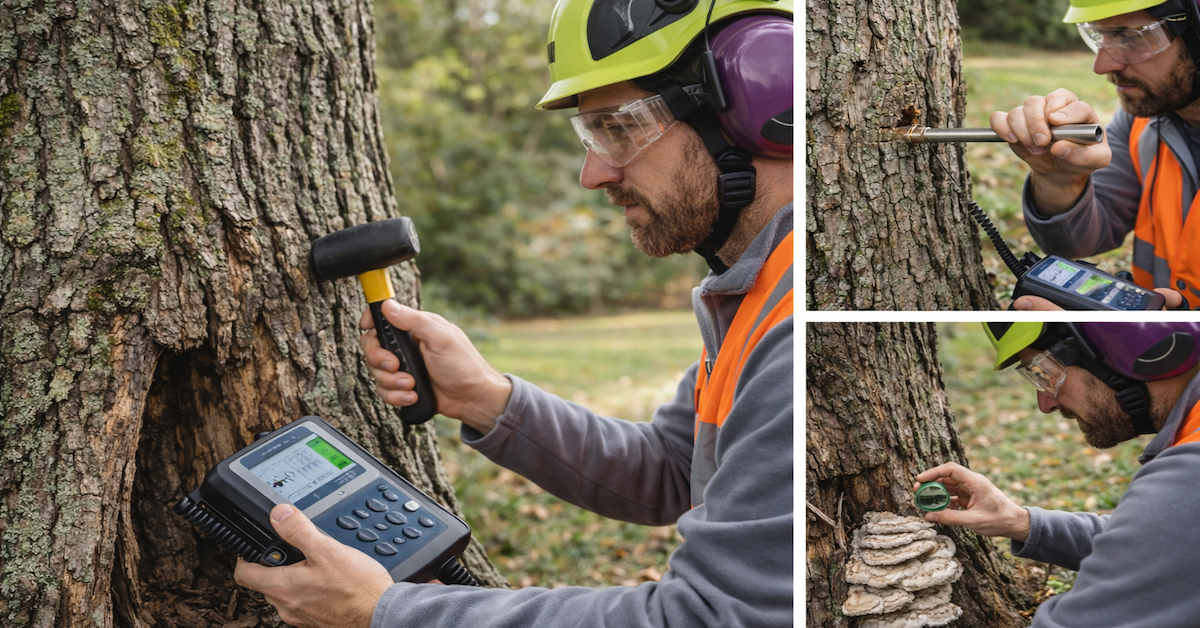
Trees can experience stress, disease, pests, and internal decay long before the signs become obvious. Homeowners often notice issues only when leaves change unexpectedly, branches die back, or growth seems uneven. By that point, the problem may already be advanced. Arborists play an important role in evaluating trees early, identifying the real cause of the symptoms, and recommending the best course of action.
Tree diagnosis is not as simple as looking at a leaf or tapping the trunk. A trained arborist uses a combination of observation, tools, tests, and experience to understand what is happening inside and around the tree. This careful process is what helps protect trees and maintain safety on your property.
Quick Answer: Arborists diagnose tree health problems by observing visible symptoms, inspecting the trunk and canopy, checking soil conditions, testing moisture levels, looking for pests or fungal activity, and using specialized tools to examine internal decay. They evaluate both environmental and biological factors to determine the true cause of stress or decline. This thorough approach ensures accurate treatment and protects the tree’s long term health.
Visual Inspection of the Canopy
One of the first steps an arborist takes is examining the canopy. The canopy reveals early signs of stress such as thinning leaves, discolored foliage, dead limbs, or uneven growth. These symptoms can point to nutrient deficiencies, pest infestations, or internal structural problems.
A thinning canopy is often a sign that the tree is struggling to transport water or nutrients. Dead or dying branches may signal decay or disease. By studying the canopy, the arborist forms an initial understanding of what might be happening inside the tree.
This step helps guide their deeper investigation.
Examining the Trunk for Physical Damage
The trunk provides key clues about the tree’s structural integrity. Arborists look for cracks, cavities, peeling bark, soft spots, and areas where the wood appears discolored. These details can signal internal decay, fungal growth, past storm damage, or root issues.
Small holes in the bark may indicate insect activity. Dark streaks or oozing sap can point to infection or disease. Even slight swelling on one side of the trunk may show the tree is compensating for internal weakness.
A careful trunk inspection helps the arborist determine whether the problem is surface level or deeper inside the tree.
Assessing the Root Zone and Soil Conditions
A tree’s health depends heavily on its roots, even though they are hidden underground. Arborists look for signs of root damage such as soil compaction, poor drainage, exposed roots, or fungal growth at the base.
Soil conditions are tested for factors like:
• Moisture levels
• Nutrient balance
• Soil pH
• Drainage quality
Compacted soil prevents roots from absorbing necessary water and oxygen. Overly wet soil can lead to root rot. A tree growing in poor soil may appear stressed even if there are no visible signs of disease.
Evaluating the root zone gives the arborist a clearer picture of the tree’s overall environment.
Checking for Pests and Insects
Many tree health problems begin with insects. Arborists look for small holes, sawdust-like material, frass, chewing marks, or insects themselves. Beetles, borers, caterpillars, and mites can all cause significant damage.
Some pests attack the bark and trunk, while others feed on leaves or bore into the wood. Identifying the specific insect helps the arborist recommend appropriate treatments that protect the tree without harming the surrounding environment.
Early detection of pests often prevents larger infestations that could threaten the entire tree.
Looking for Signs of Fungus or Disease
Fungal infections are a common cause of tree decline. Arborists look for mushrooms, fungal conks, discolored bark, or unusual patterns on leaves. Some fungi attack the roots, while others affect the trunk or branches.
Each type of fungus provides clues about how advanced the decay may be. For example, shelf fungi growing on the trunk often indicate internal rot that has been developing for years. Leaf spots, wilted leaves, or premature leaf drop may reveal diseases affecting the canopy.
Disease diagnosis is essential for knowing whether a tree can be saved or requires removal.
Using Tools to Detect Internal Decay
When visual inspection is not enough, arborists may use specialized tools to check the inside of the trunk. These tools help measure the density of the wood and detect hollow areas or weakened sections that are not visible from the outside.
Some common diagnostic tools include:
• Mallets for sounding and listening for hollow tones
• Resistographs to measure wood density
• Increment borers to examine core samples
These tools allow arborists to understand whether a tree is structurally safe or at risk of falling. Internal decay cannot always be seen, but it can be detected with the right equipment.
Analyzing Environmental Stressors
Sometimes the problem is not disease or pests. Heatwaves, droughts, flooding, construction damage, and soil changes can stress trees. Arborists consider these environmental factors when diagnosing issues.
For example, a tree may lose leaves early because of drought stress rather than disease. Construction near the root zone may have compacted the soil. Nearby chemical use may have affected growth.
Considering the surrounding environment ensures a more accurate diagnosis.
Providing a Professional Diagnosis and Solution
Once the arborist gathers all the information, they identify the cause of the tree’s health issue and recommend solutions. These may include:
• Pruning
• Soil treatments
• Pest control
• Fungus management
• Root zone improvements
• Cabling or bracing
• Tree removal if necessary
Their diagnosis helps homeowners make informed decisions that protect both the tree and the property.
Conclusion
Arborists use careful observation, specialized tools, and environmental analysis to diagnose tree health problems accurately. By examining the canopy, trunk, roots, soil, pests, and signs of disease, they identify the true cause of a tree’s decline. Early diagnosis helps protect your landscape and ensures that the right treatment is applied at the right time.
Sawvell Tree Service provides expert tree inspections and health evaluations to help homeowners address problems early. Their trained team can diagnose issues before they become dangerous and offer solutions that support long term tree health.