

What Is Dutch Elm Disease and How Do You Treat It?
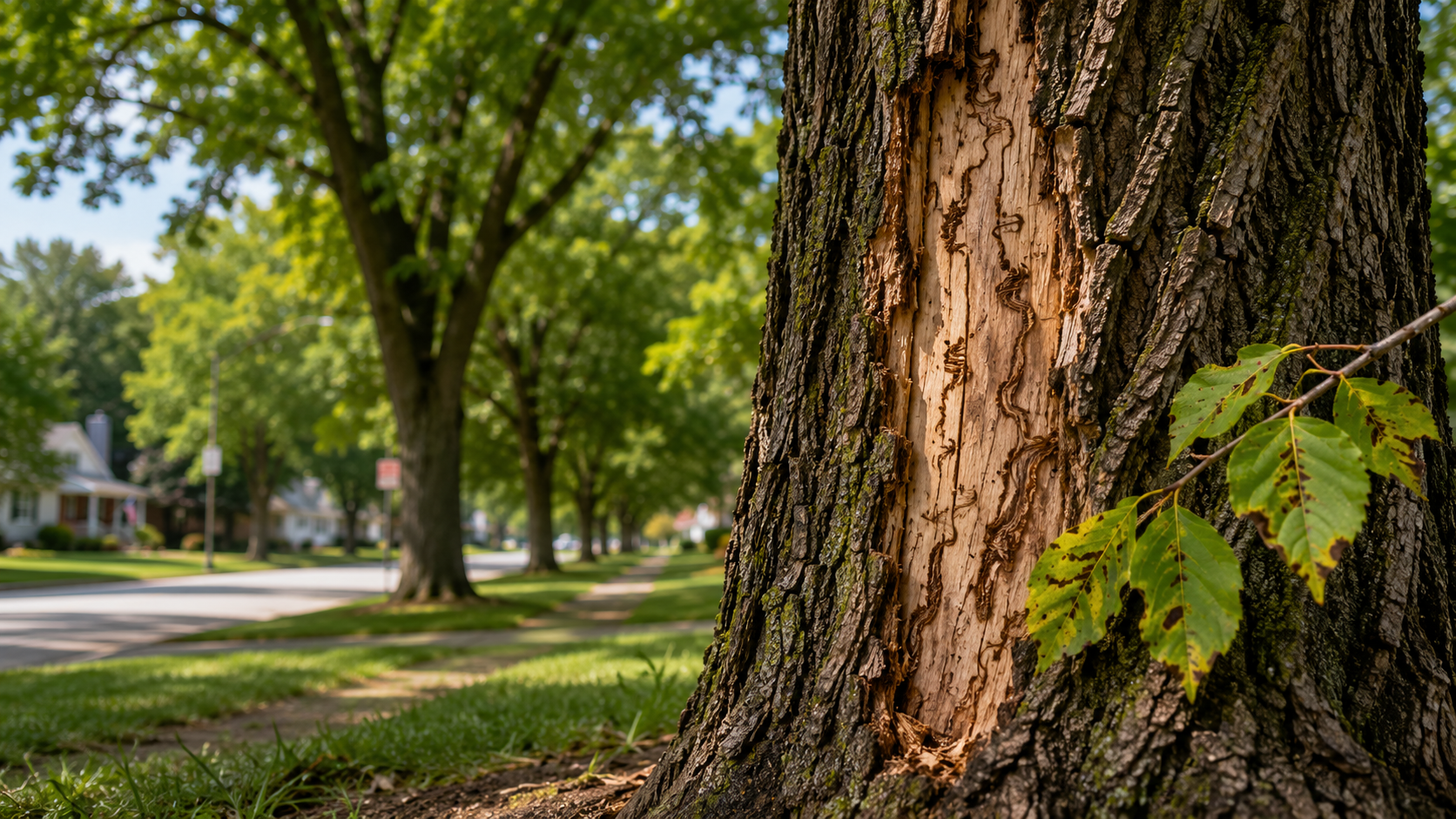
Dutch elm disease is one of the most destructive plant diseases to have affected North American forests and urban landscapes. Since it arrived in the United States in the 1930s, it has killed tens of millions of elm trees across the continent, fundamentally changing the character of many streets, parks, and properties that once relied on mature elms for their canopy. For homeowners in Northern Illinois who have an elm on their property, understanding this disease is not an academic exercise: it directly affects whether that tree can be saved or must eventually be removed.
The disease is called Dutch because Dutch plant pathologists were the first to identify and study it in the 1920s, though the pathogen itself originated in Asia. The name has led to some confusion about its geographic origins, but the practical reality for Illinois property owners is straightforward: the disease is present in the region, elm bark beetles that spread it are active during warm months, and an elm that has not been managed proactively is at risk.
Quick Answer: Dutch elm disease is a fungal infection caused by Ophiostoma novo-ulmi that invades the vascular system of elm trees, blocking water and nutrient transport and causing the tree to wilt and die from the crown downward. It is spread primarily by elm bark beetles carrying fungal spores between trees. Treatment options include preventative fungicide injections for valuable trees that are not yet infected, pruning infected branches before the disease reaches the trunk, and removing and disposing of infected trees before the beetles within them emerge and spread the pathogen.
How Dutch Elm Disease Kills Trees
The disease is caused by a fungus that invades the xylem, the water-conducting vessels in the tree's wood. As the fungus spreads through the vascular system, the tree attempts to contain it by producing defensive compounds that further block the vessels. This combination of fungal invasion and the tree's own defensive response progressively shuts down water transport from the roots to the canopy.
The result is visible wilting and yellowing of leaves in one or more branches, followed by browning and death of those branches as they are effectively cut off from their water supply. This progression is called flagging: a distinctive pattern where individual branches or sections of the crown brown and die while the rest of the tree appears normal. If a branch showing these symptoms is cut, the cross-section of the wood typically shows a brown or dark discolouration in a ring pattern, which is the stained vascular tissue.
How the Disease Spreads
Dutch elm disease spreads through two primary mechanisms. The first and most common is beetle transmission: elm bark beetles carry fungal spores on their bodies and introduce them into healthy trees when they feed on bark tissue during their adult phase. The European elm bark beetle and the native elm bark beetle are both vectors in Illinois.
The second mechanism is root grafting. Elms growing in close proximity often develop root connections between neighbouring trees, and once the fungus is in one tree's root system it can pass directly into adjacent trees through these connections. This root graft transmission explains why Dutch elm disease sometimes appears to jump rapidly through a row of elms even when beetle populations are not particularly high, and it is why removing an infected tree promptly rather than leaving the trunk in place matters significantly.
Recognising Dutch Elm Disease Early
The most important factor in saving an elm from Dutch elm disease is catching the infection before it reaches the root system or the main trunk. Early signs of tree decline in an elm include single branches showing wilting and yellowing of leaves in late spring or summer, flagging of crown sections, and the characteristic brown ring or streaking visible in cross-sections of affected branches.
If flagging is limited to branches in the upper crown that are well removed from the main trunk, surgical pruning to remove the infected material before the fungus migrates downward gives the tree a chance. The window for this intervention is narrow: once the fungus reaches the root system or the main trunk, treatment becomes largely ineffective.
Treatment Options
Preventative Fungicide Injections
For valuable elms that have not yet shown signs of infection, preventative systemic fungicide injections provide meaningful protection. Products containing propiconazole or thiabendazole are injected directly into the tree's vascular system, where they circulate through the xylem and suppress fungal growth if the tree is subsequently infected. A single preventative treatment typically provides two to three years of protection, after which re-treatment is needed.
Preventative treatment is most appropriate for large, well-established elms that have significant landscape, heritage, or shade value and that the property owner wants to protect over the long term. The cost of repeated treatment over a tree's lifespan needs to be weighed against the value of the tree and the cost of eventual removal and replacement.
Surgical Pruning
When infection is detected early and is limited to upper crown branches, surgical pruning to remove the infected branches well below the point of visible infection can contain the fungus before it spreads further. Cuts must be made at least ten to fifteen feet below the lowest point of discolouration in the affected branch to ensure the fungus is not left in the remaining wood.
This work requires careful assessment and professional pruning services from someone familiar with Dutch elm disease management, because an inadequate pruning cut that leaves infected material in the tree accelerates rather than prevents the spread.
Removal of Infected Trees
When infection has progressed to the point where treatment is no longer viable, prompt removal and proper disposal of the tree is the most important action for preventing further spread. Infected elm wood should not be left on the property as firewood or mulch: the bark beetles that spread the disease overwinter in dead elm wood and emerge as adults in spring carrying fungal spores. Removing and chipping the wood, or having it removed from the property, eliminates this emergence source.
Factors That Increase Susceptibility
Elms under stress from drought, poor soil conditions, or recent physical damage are more susceptible to Dutch elm disease because stressed trees are less able to mount effective defence responses against the fungal infection. Drought stress in trees in Northern Illinois summers is a significant background factor for elm health, and supplemental watering during dry periods supports a tree's ability to resist infection.
For property owners with valuable elms, getting a certified arborist assessment of the tree's current health and the appropriate preventative programme is the most reliable starting point for a long-term protection strategy.
Frequently Asked Questions
Are all elm species equally susceptible to Dutch elm disease?
No. American elm is the most susceptible and has suffered catastrophic losses. Some Asian elm species have significant natural resistance, and disease-resistant cultivars of American elm have been developed through selective breeding programmes. If you are considering planting a new elm, choosing a disease-resistant variety is strongly recommended.
What does Dutch elm disease look like in summer?
The characteristic sign is flagging: individual branches where the leaves wilt, turn yellow, and then brown while remaining attached to the branch, during late spring or summer when the rest of the tree looks healthy. This browning of individual branch tips while the surrounding canopy appears normal is the most distinctive early symptom.
Can a tree recover from Dutch elm disease without treatment?
Rarely and only in the very earliest stages of a very limited infection. Once the fungus is established in the vascular system, it spreads progressively and the tree's natural defences are not sufficient to eliminate the infection without intervention. Early surgical pruning can stop the spread if caught at the right moment, but this still requires human action rather than natural recovery.
How do I dispose of elm wood from a diseased tree?
Infected elm wood should not be stored on the property as firewood or left as a log pile. The wood should either be chipped into small pieces (which disrupts the bark beetle habitat), burned, or transported off the property before beetle emergence in spring. Debarking the logs also destroys the beetle habitat even if the wood is kept.
Is Dutch elm disease treatment covered by homeowners insurance?
Typically not, as tree disease is generally classified as a natural event rather than an insured peril. If an infected elm falls on a structure during its decline, the structural damage may be covered depending on policy terms, but the cost of disease treatment, tree removal, and stump grinding is generally the property owner's responsibility.
The Bottom Line
Dutch elm disease is a serious and potentially fatal vascular fungal infection spread by bark beetles and root grafts. Early detection, preventative fungicide treatment for valuable trees, surgical pruning for early-stage infections, and prompt removal of seriously infected trees are the tools available for managing the disease in Northern Illinois.
Sawvell Tree Service provides Dutch elm disease assessments, preventative treatment programmes, and elm removal services throughout Lake County and the North Shore. If you have an elm that concerns you or want to discuss a preventative programme, reach out for a professional assessment.