

How Do Drought and Heat Stress Affect Tree Stability?
Why are trees suddenly dying in Lake County after hot summers?
Trees depend on consistent access to water and moderate environmental conditions to remain strong and healthy. During periods of drought or extreme heat, trees experience stress that can affect their growth, structure, and overall stability. These conditions can weaken trees gradually, making them more vulnerable to damage during storms or high winds.
Many homeowners assume that drought only affects a tree’s appearance, such as causing leaves to wilt or fall early. However, the impact of prolonged heat and water shortages often goes deeper than what is visible above ground. Stress can affect root systems, reduce structural strength, and increase the likelihood of branches breaking.
Quick Answer: Drought and heat stress weaken trees by reducing water supply, damaging root systems, and limiting nutrient absorption. Over time, this stress can reduce structural strength and increase the risk of branch failure or tree instability.
How Trees Respond to Drought
When water becomes scarce, trees must adapt in order to survive. One of the first responses is reducing leaf growth or shedding leaves early. This helps the tree conserve water and minimize moisture loss.
Although this adaptation helps the tree survive temporarily, it can also reduce the tree’s ability to produce energy through photosynthesis. Over time, reduced energy production can weaken the tree’s overall health.
Drought conditions can also slow root growth, limiting the tree’s ability to access deeper water sources.
The Impact of Heat Stress on Tree Health
Extreme heat places additional strain on trees that are already struggling with limited water. High temperatures increase the rate of moisture loss through leaves, which can accelerate dehydration.
Heat stress may cause leaf scorching, where leaves develop brown or yellow edges. This condition often indicates that the tree is losing moisture faster than it can absorb it.
Prolonged heat stress can also weaken branches and reduce the tree’s resistance to pests and diseases.
How Drought Weakens Tree Stability
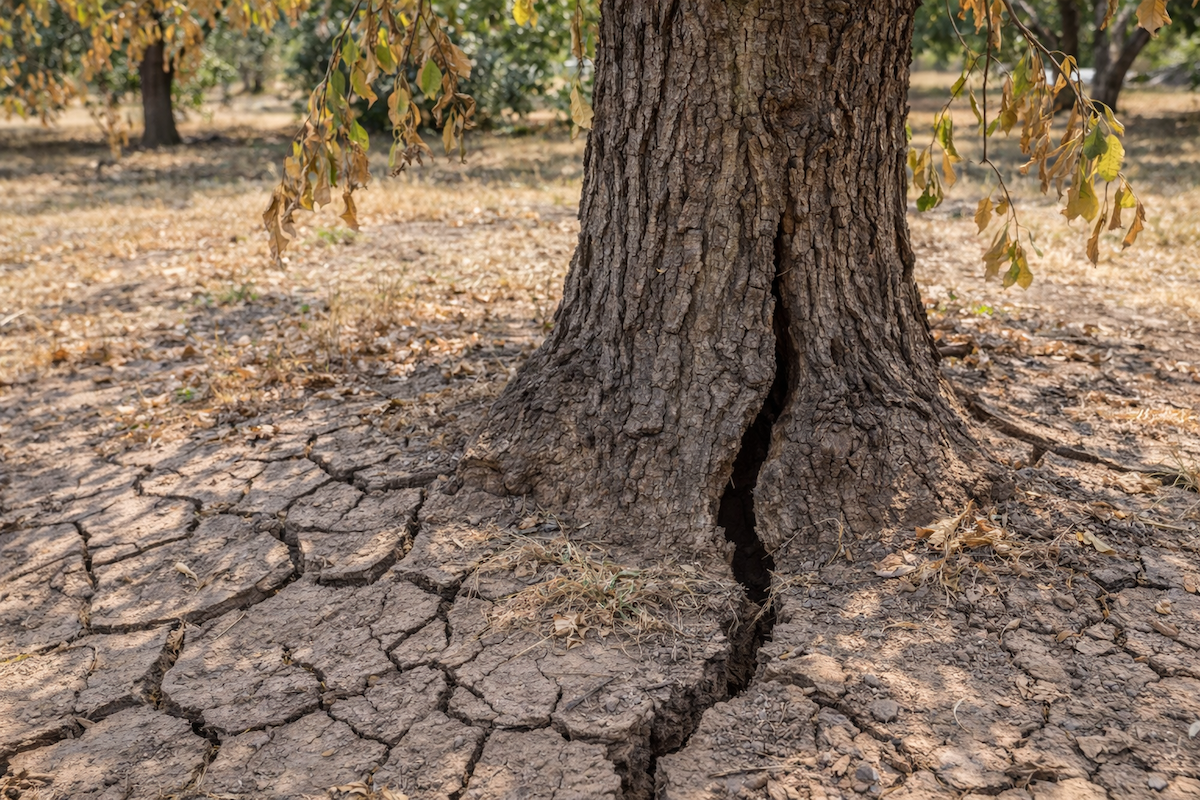
One of the most significant risks of drought is its effect on tree stability. When soil becomes extremely dry, roots may lose their ability to anchor the tree firmly in place.
Reduced root strength can make trees more vulnerable to tipping or falling during strong winds. In some cases, drought damaged roots may die off, further reducing stability.
Dry soil conditions can also lead to cracking or shifting ground, which affects the tree’s ability to remain upright.
Frequently Asked Questions
Can drought kill large trees?
Yes, prolonged drought can weaken even mature trees. Without sufficient water, trees may lose their ability to maintain healthy roots and foliage.
How can I protect trees during drought?
Deep watering, mulching, and reducing soil disturbance around the tree can help maintain moisture levels.
Do drought stressed trees become dangerous?
Trees weakened by drought may become more prone to falling branches or structural failure, especially during storms.
Should drought damaged trees be inspected?
Yes, a professional tree inspection can help determine whether a tree remains stable or requires pruning or removal.
Conclusion
Drought and heat stress can have serious effects on tree health and stability. Reduced water availability weakens root systems, limits nutrient absorption, and increases the risk of structural damage. Recognizing these risks early allows homeowners to take steps that protect both their trees and their property.
For expert evaluation and professional tree care, Sawvell Tree Service provides guidance and services designed to maintain healthy and stable trees in challenging environmental conditions.