

How Much Does Tree Removal Cost in Lake County, IL?
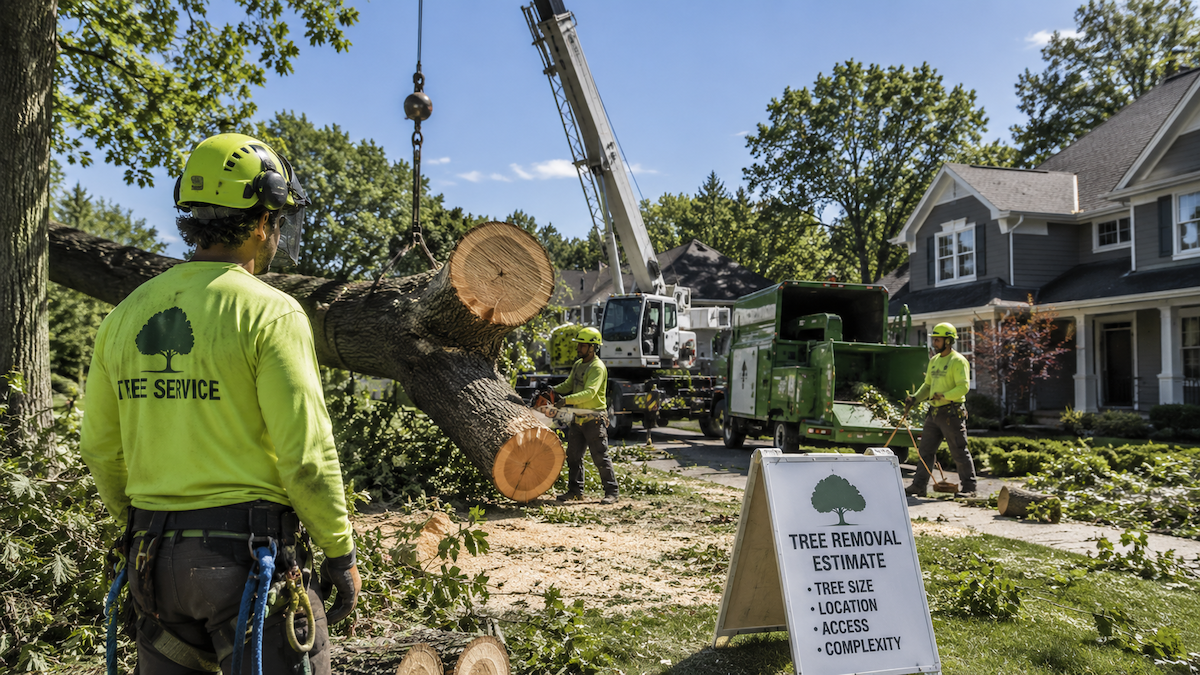
Tree removal is one of those services where the range of prices quoted can seem bewilderingly wide until you understand what is driving the differences. A small ornamental tree in an open yard is a fundamentally different job from a seventy-foot oak growing against a house in a tight suburban lot with overhead lines nearby. Both involve cutting down a tree, but almost nothing else about them is the same in terms of complexity, equipment, risk, or time.
For homeowners in Lake County, Illinois, understanding what drives the cost of tree removal helps in two ways. First, it sets realistic expectations before calling for quotes. Second, it gives you the knowledge to evaluate whether a quote is reasonable or whether something is missing from the picture. The lowest quote is not always the best value, and knowing why helps you make a confident decision.
Quick Answer: Tree removal in Lake County, IL typically costs between $300 and $2,500 for most residential trees, with the majority of jobs falling in the $500 to $1,500 range. Very large, complex, or emergency removals can push costs significantly higher, sometimes exceeding $5,000. The final price depends on tree size, location relative to structures and utilities, access for equipment, whether stump removal is included, and how the debris is handled.
Tree Size Is the Starting Point for Pricing
Tree size, measured primarily by height and trunk diameter, is the most direct driver of removal cost. Larger trees produce more wood volume, require more crew hours to process, demand more powerful equipment, and involve greater risk management during the removal. A tree under thirty feet tall with straightforward access might take a crew of two a couple of hours. A mature oak at sixty or seventy feet close to a structure can take a full crew of four or five most of a day.
Understanding how the average cost of tree removal breaks down by size helps set a reasonable baseline: small trees typically fall in the $300 to $700 range, medium trees from $700 to $1,500, and large trees from $1,500 upward depending on the specific conditions.
Trunk diameter matters alongside height because it determines how quickly the tree can be sectioned and processed. A twenty-inch trunk takes considerably more time to cut through than an eight-inch one, and every extra pass of the saw adds time and crew effort.
Location and Access: The Factors That Change Everything
The location of the tree within the property has as much influence on cost as the size of the tree itself, sometimes more. A large tree standing clear of structures in an open lawn with good equipment access is a straightforward job. The same tree growing against a house, over a pool, or between two structures requires careful rigging, controlled lowering of sections, and a level of precision that takes considerably more time.
When a tree cannot be safely felled or sectioned without risk to adjacent structures, crane-assisted removal becomes the appropriate method. Crane work allows entire sections to be lifted clear of obstacles and placed safely on a processing area, but it adds the cost of the crane rental and the additional crew coordination required.
Access for chipping and debris equipment also affects price. If a truck and chipper can park immediately adjacent to the work area, debris removal is fast. If equipment has to be parked at the street and debris carried or wheeled a significant distance, that adds time and therefore cost.
Overhead Lines and Hazard Conditions
Trees growing into or near utility lines require either the utility company's involvement or a very careful removal approach that accounts for the line clearance throughout. Utility companies in Illinois handle lines attached to the house, but trees near distribution lines on the street side of the property involve different protocols and may require the line to be temporarily de-energised by the utility company before work can proceed.
Trees in structurally compromised condition, whether from disease, decay, storm damage, or significant lean, carry higher risk during removal because their behaviour under cutting is less predictable. Experienced crews factor this into how they approach the work, and the additional care required in these situations is reflected in the quote.
What the Quote Should Include
When comparing tree removal quotes from different companies, the most important step is confirming that each quote covers the same scope of work. A quote that seems significantly lower may exclude debris removal, stump grinding, or cleanup, making it an unfair comparison against a fully inclusive quote.
Debris removal is a meaningful portion of the total job. Wood from a large tree is substantial in volume and weight. Chipping the smaller branches and hauling the logs is a full component of the work that should be clarified in any quote. Some companies will leave logs for firewood on request, which can reduce cost, but confirming the full disposal arrangement avoids surprises.
Stump grinding is almost always quoted separately from the removal itself. If you want the stump removed, confirm it is included or ask for the additional cost. Some homeowners prefer to leave stumps in place and grind them at a later date, which is a perfectly reasonable approach.
Emergency Removal and After-Hours Pricing
When a storm brings a tree down onto a structure, power line, or across a driveway, the removal needs to happen quickly. Emergency removal costs more than a scheduled removal because it requires a crew to mobilise outside normal working hours, often at short notice and in challenging conditions.
Emergency premiums vary but can add 25 to 50 percent to the cost of an equivalent scheduled job. If a fallen tree is not posing an immediate threat to life or essential services, waiting until regular business hours and scheduling a removal the following morning can save a meaningful amount.
Why the Lowest Quote Is Not Always the Best Value
Professional tree removal is skilled, dangerous work. Why professional tree services cost more than either DIY or unlicensed operators comes down to the equipment, training, and insurance required to do the work safely. A company with proper insurance protects the homeowner: if something goes wrong during the removal, their policy covers it.
The difference between a properly licensed and insured tree service and one that is not is not always visible in the quote, but it is very visible if something goes wrong. Always confirm that the company carries both general liability insurance and workers' compensation before authorising work.
Frequently Asked Questions
How much does it cost to remove a large oak tree in Lake County?
A large mature oak, typically sixty feet or taller, in a standard residential setting in Lake County will generally range from $1,500 to $3,500 depending on location, access, and complexity. Trees requiring crane assistance or growing close to structures will sit at the higher end of this range.
Is stump grinding included in tree removal quotes?
Stump grinding is typically quoted separately. When requesting a quote, ask specifically whether it is included and what the additional cost would be to include it. Stump grinding in Lake County typically adds $150 to $400 depending on the stump diameter and accessibility.
Does homeowners insurance cover tree removal in Illinois?
Homeowners insurance in Illinois typically covers tree removal when the tree falls on a covered structure due to a qualifying event such as a wind or ice storm. Removal of a tree that fell in the yard without hitting a structure is generally not covered. A fallen tree that was already known to be dead or hazardous before it fell may also not be covered.
How long does a typical tree removal take in Lake County?
A small to medium tree in an accessible location usually takes one to three hours. A large tree in a complex location can take a full day or more. The crew size and equipment available also affects how quickly the job moves.
Can I get a tree removal quote over the phone or online?
Most reputable tree services will provide a ballpark range over the phone but prefer to see the tree in person before providing a firm quote. Site conditions, access, and tree specifics are difficult to assess remotely, and an in-person assessment produces a more accurate number.
The Bottom Line
Tree removal costs in Lake County, IL are driven by tree size, location, access, and scope of work. Most residential jobs fall between $500 and $1,500, with complex or large-tree jobs running higher. Getting multiple quotes for the same defined scope and confirming insurance coverage are the two most important steps before proceeding.
Sawvell Tree Service provides free estimates for tree removal throughout Lake County and the North Shore. If you have a tree that needs to come down, contact the team for an honest assessment of what the job involves and what it will cost.