

Does Removing a Tree Increase or Decrease Property Value?
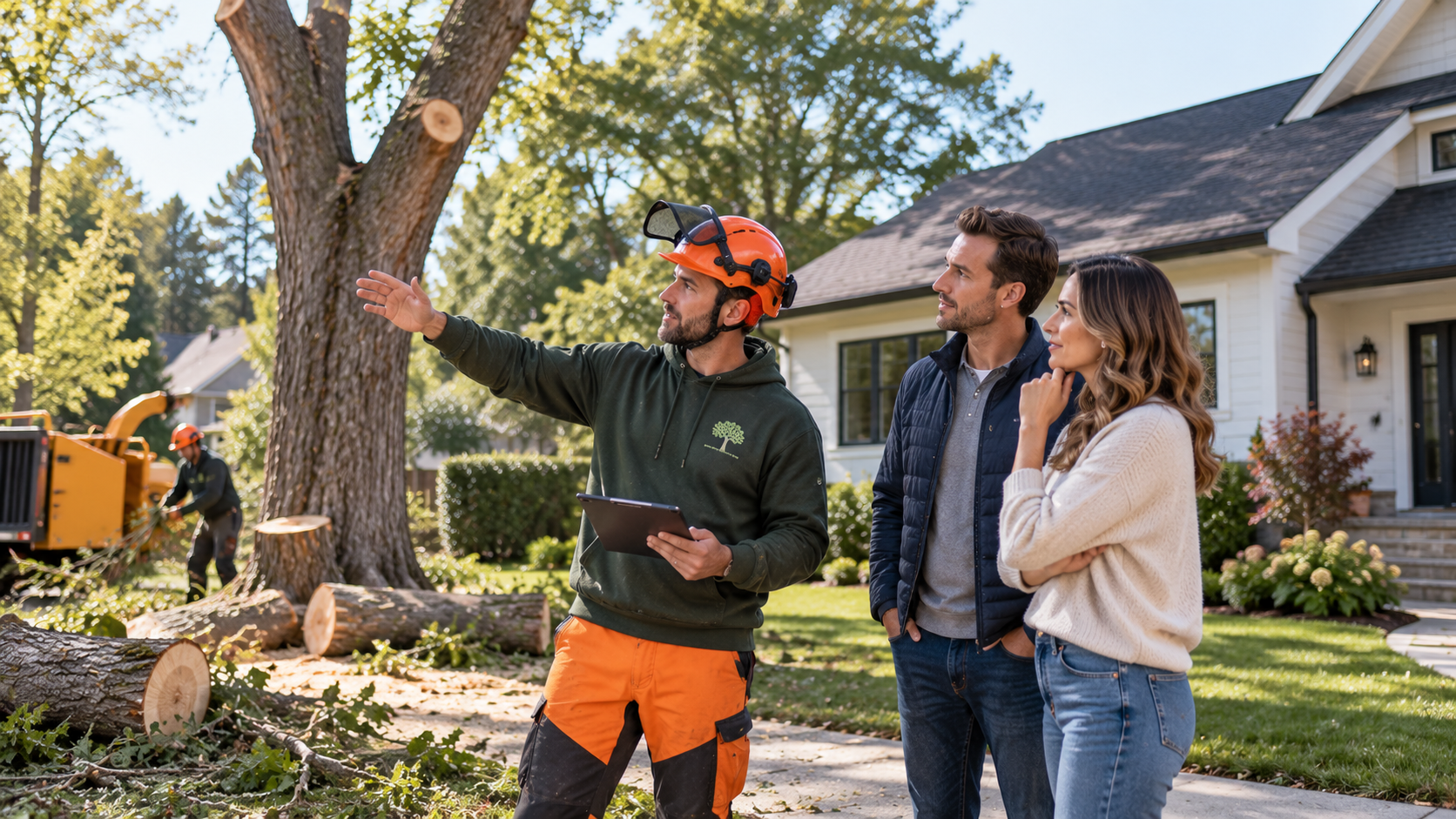
Trees are often one of the most valuable visual features on a residential property. A mature canopy can provide shade, privacy, seasonal color, and a sense that the landscape has been established for years. At the same time, a dead, unstable, badly placed, or repeatedly damaging tree can make buyers think about repair costs and safety before they notice any of those benefits.
That makes tree removal a property value question as much as a tree care decision. Homeowners sometimes assume that removing a large tree will automatically open the yard and increase value, while others worry that any removal will make the property less desirable. In reality, the result depends on the condition, location, species, size, and role of the specific tree.
Quick Answer: Removing a hazardous, dead, declining, or poorly located tree can protect or improve property value because it reduces obvious risk and may improve the usable landscape. Removing a healthy, attractive, well-placed mature tree can decrease value by taking away shade, privacy, curb appeal, and established canopy. The best financial decision is based on the tree itself, not on removal alone.
Do Healthy Mature Trees Usually Add Property Value?
Healthy mature trees usually support property value when they are well placed and appropriately maintained. Buyers often respond positively to shade, attractive framing around the house, privacy from neighboring properties, and a landscape that does not look newly planted or bare. Research on urban tree cover also generally finds a positive relationship between tree canopy and residential property values.
The benefit is not simply that a tree is large. Condition and location matter. A symmetrical shade tree set away from the foundation can be an asset, while a similarly sized tree with large dead limbs over the roof may feel like a future expense. Regular tree trimming and pruning helps preserve the qualities buyers value while reducing weak, dead, or overextended growth.
The most valuable tree is often the one that looks intentional in the landscape. It has room for its canopy, does not crowd the house, and appears healthy enough to remain part of the property for years.
When Can Removing a Tree Increase Property Value?
Removal can improve how a property is perceived when the tree is clearly creating a problem. A dead tree, severely declining canopy, major structural defect, or heavy lean toward a home may make a buyer wonder about emergency work, roof damage, insurance concerns, or future removal costs.
In those cases, completing professional tree removal before listing can turn an obvious liability into a cleaner, safer site. It can also make room for a better landscape plan, improve light, reopen a blocked view, or reduce conflict with a driveway, patio, garage, or neighboring property.
Removal can also be positive when a tree has outgrown the location so badly that repeated hard pruning is required. If the canopy constantly presses against the building or the roots and trunk leave little usable space, replacing the tree with a species suited to the site can improve long-term function.
When Can Tree Removal Decrease Property Value?
Removing a healthy mature tree can reduce appeal when that tree is a defining part of the property. Mature canopy takes years to replace. A newly planted tree may eventually provide similar shade or screening, but it cannot recreate the same presence immediately.
Loss of shade can also change how the house and yard feel in summer. A formerly private patio may become exposed, a sunny lawn may become hotter, or a street-facing home may lose the visual buffer that made the front yard attractive. These changes are difficult to capture in a simple dollar figure, but buyers notice them.
This is why Sawvell Tree Service treats removal as a decision that should follow condition and risk assessment rather than appearance alone. A certified arborist assessment can help determine whether pruning, plant health care, monitoring, or removal makes the most sense.
Does a Dangerous Tree Hurt Value Even Before It Fails?
Yes, a visibly dangerous tree can affect buyer confidence even if no damage has occurred. Large dead branches over a roof, a split trunk, significant decay, a tree leaning after a storm, or obvious root plate movement can signal future expense. Buyers may request an arborist review, ask for a credit, or factor removal into their offer.
The more immediate concern is safety. If a tree or large limb becomes unstable after severe weather, 24 hour emergency tree service may be needed before any real estate decision matters. Resolving known hazards promptly protects the home and also creates clearer information for future buyers.
A documented professional assessment can be useful when the tree looks dramatic but is actually stable. Not every large or leaning tree needs to be removed. The goal is to separate visual concern from measurable structural problems.
How Does Stump Removal Affect the Finished Property?
The condition of the site after removal matters. A cut stump left in the middle of a lawn can make the job feel unfinished, create a mowing obstacle, and limit future planting. Roots may remain below ground, but the visible base can usually be reduced so the area is easier to restore.
Professional stump grinding grinds the remaining wood below the surface and leaves the area ready for a restoration plan after the grindings are managed. For a property being prepared for sale, that cleaner finish can make the landscape look more deliberate than a fresh stump surrounded by debris.
Homeowners should decide what they want the space to become before the work begins. Grass, a planting bed, a new tree, or a hardscape feature may require different cleanup depths and follow-up preparation.
Does the Way a Tree Is Removed Matter for Property Protection?
Yes. Large tree removal near a valuable home is not only about getting the tree down. The process should protect roofs, lawns, driveways, fences, pools, neighboring plants, and other trees. A poorly controlled removal can create damage that outweighs any benefit from taking the tree out.
When the fall zone is limited, crane assisted tree removal can lift sections away from structures instead of allowing them to drop. This is especially useful on mature properties where large trees share tight space with homes and finished landscaping.
Sawvell also serves properties where large canopies and limited access are common through its North Shore tree service work. Planning around the site is part of preserving value because a clean, controlled project leaves the rest of the landscape intact.
Should You Remove a Tree Before Selling a Home?
Remove a tree before selling when a qualified assessment shows that it is dead, hazardous, severely declining, or creating a clear conflict that a buyer would reasonably inherit. If the tree is healthy and attractive, do not remove it simply to make the yard look more open without considering what the property loses.
For borderline cases, start with maintenance. Pruning deadwood, correcting clearance problems, and improving structure may reduce the concern without sacrificing mature canopy. A pre-sale tree condition inspection can also identify obvious issues before they become part of a buyer inspection or negotiation.
Think like a buyer standing at the curb. A healthy tree that frames the home can be an asset. A tree that looks neglected, damaged, or threatening can become the first problem they see.
How Should Replacement Planting Factor Into the Decision?
When removal is necessary, replacement planting can protect the long-term landscape value. The new tree should be chosen for its mature size, site conditions, available soil, overhead space, and distance from buildings. Planting the wrong species in the same tight spot can recreate the original problem.
Replacement does not need to mimic the removed tree exactly. A smaller ornamental may fit near a house, while a larger shade tree may be better placed farther into the yard. The best plan restores canopy where it provides benefits without setting up future conflicts.
Sawvell offers a wider range of tree care services beyond removal, which makes it easier to look at the entire property rather than one tree in isolation. That broader view matters when several trees contribute to privacy, shade, and curb appeal together.
How Can You Decide Whether Removal Helps or Hurts Value?
Start with condition, risk, and location. If the tree is healthy, structurally sound, and contributing shade or visual appeal, preservation usually deserves serious consideration. If it is unsafe, declining beyond practical treatment, or permanently incompatible with the site, removal may protect both the property and the budget.
Then consider what the yard will look like afterward. Will removal reveal an attractive facade or create an empty gap? Will the space become more usable, or will the house lose privacy? Will the stump be ground and the area restored? These details often influence perceived value more than the act of removal itself.
A professional recommendation should also explain why removal is or is not necessary. Homeowners do not need a simple yes or no. They need enough information to understand the tradeoff between keeping a mature asset and eliminating a future liability.
Frequently Asked Questions
Property value questions rarely have one answer because buyers, trees, and neighborhoods differ. These are the most useful practical questions to ask.
Does removing a dead tree increase home value?
It can improve buyer confidence and protect value because a dead tree is an obvious maintenance and safety concern. The financial effect varies by property, but removing a clear hazard usually presents better than leaving the future cost to a buyer.
Can a large tree make a house worth more?
A healthy, attractive, well-placed mature tree can add curb appeal, shade, and privacy that buyers value. A large tree with defects or poor placement can have the opposite effect, so size alone does not determine value.
Should I remove a tree to improve a view?
Only after considering the tree condition, the importance of the view, privacy, shade, and the appearance of the property without the canopy. Selective pruning may sometimes improve sightlines without removing the entire tree.
Does stump grinding help resale appeal?
It often gives the yard a cleaner and more finished appearance after removal. Grinding also makes it easier to mow, landscape, or prepare the area for future planting.
Who can tell me whether a tree is worth keeping?
A certified arborist can assess species, health, structure, defects, site conditions, and management options. That is more useful than judging the tree only by age, size, or proximity to the house.
Conclusion
Tree removal can either protect property value or reduce it. Removing a hazardous or badly declining tree can eliminate risk and improve the site, while removing a healthy mature tree can take away shade, privacy, character, and established canopy that buyers appreciate.
Sawvell Tree Service can evaluate the tree, explain the practical options, and complete removal and cleanup when it is truly the right choice. If you are weighing safety against landscape value, a professional assessment is a sensible place to start.