

How High Can Trees Be Safely Trimmed Without Harming Them?
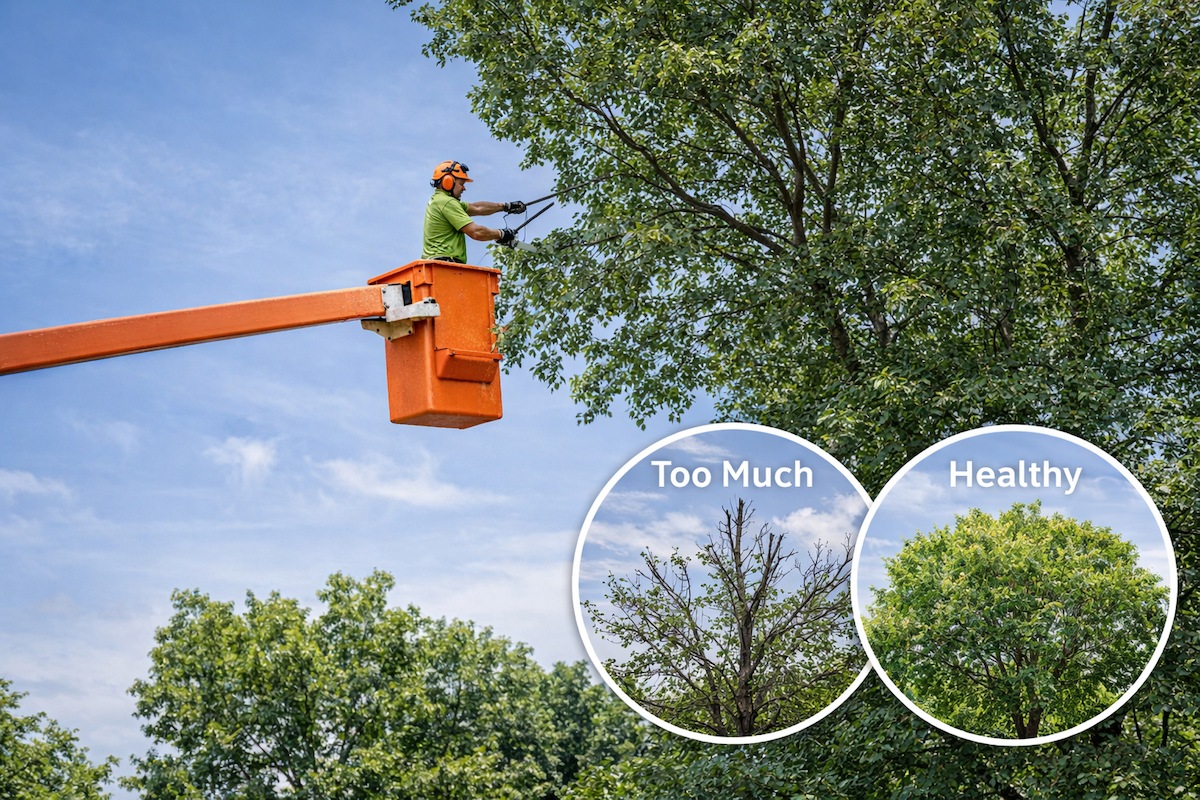
Tree trimming is an important part of maintaining healthy trees and safe landscapes. Many homeowners trim trees to remove hazardous branches, improve the tree’s appearance, or prevent interference with structures and power lines. However, trimming must be done carefully to avoid damaging the tree or weakening its natural structure.
One common concern among property owners is how much of a tree can be safely trimmed. Removing too many branches at once can place stress on the tree and disrupt its natural growth patterns. Understanding proper trimming limits helps protect tree health while still achieving necessary maintenance goals.
Quick Answer: Trees can typically be safely trimmed by removing no more than 20 to 25 percent of the canopy at one time. Trimming beyond this level can stress the tree and weaken its structure.
Understanding Tree Canopy Structure
The canopy of a tree includes all the branches and leaves that extend from the trunk. This portion of the tree plays a critical role in energy production because leaves perform photosynthesis.
When too much of the canopy is removed, the tree loses its ability to produce the energy it needs to grow and remain healthy. This can lead to stress, slowed growth, and increased vulnerability to disease.
Maintaining a balanced canopy allows the tree to continue functioning normally while still benefiting from pruning.
The Risks of Over Trimming Trees
Over trimming, sometimes referred to as topping, can seriously damage a tree. When large sections of the canopy are removed, the tree must use its stored energy reserves to produce new growth.
This sudden growth often results in weak branches that are poorly attached to the trunk. These branches may grow quickly but are more likely to break during storms.
Excessive trimming can also expose the tree to sun damage, which may cause bark cracking or other structural issues.
How Much of a Tree Should Be Trimmed
Experts generally recommend removing no more than 20 to 25 percent of the tree’s canopy during a single trimming session. This allows the tree to maintain enough leaves for healthy growth.
Selective pruning focuses on removing specific branches rather than cutting large portions of the canopy. This approach maintains the tree’s natural shape while improving safety and health.
Branches that are commonly targeted for removal include:
Dead or diseased limbs
Broken branches
Crossing or rubbing branches
Limbs growing toward structures
These targeted cuts help maintain tree health while reducing potential hazards.
Why Professional Tree Trimming Matters
Large trees can be difficult and dangerous to trim without proper training and equipment. Professional tree services understand how to trim trees in ways that promote healthy growth.
Certified arborists evaluate the structure of the tree before making cuts. They identify which branches should be removed and ensure the trimming process does not compromise the tree’s stability.
Professional trimming also helps maintain the natural appearance of the tree, which contributes to the overall beauty of the landscape.
Signs a Tree Needs Trimming
Trees should be inspected regularly to determine whether trimming is needed. Certain signs indicate that maintenance may be necessary.
These signs include:
Dead or hanging branches
Branches touching buildings or power lines
Overly dense canopy growth
Storm damaged limbs
Addressing these issues promptly helps prevent safety hazards and supports long-term tree health.
Frequently Asked Questions
Is it harmful to trim the top of a tree?
Yes, topping a tree can damage its structure and cause weak growth. Proper pruning techniques focus on selective branch removal rather than cutting the entire top.
How often should large trees be trimmed?
Most mature trees benefit from trimming every three to five years. However, this can vary depending on the species and growth rate.
Can trimming improve tree health?
Yes, removing dead or diseased branches allows the tree to direct energy toward healthy growth and reduces the risk of decay spreading.
Who should trim tall trees?
Tall trees should be trimmed by trained professionals who have the equipment and knowledge needed to perform safe and effective pruning.
Conclusion
Understanding how much a tree can be safely trimmed is essential for maintaining healthy growth and preventing damage. Removing too much of the canopy can weaken the tree and increase the risk of disease or structural problems.
By following proper pruning guidelines and working with experienced professionals, homeowners can maintain trees that are both safe and healthy for many years.
For expert tree trimming and maintenance services, Sawvell Tree Service provides reliable solutions designed to protect trees and enhance property landscapes.