

How Do Land Clearing Services Affect Soil Health?
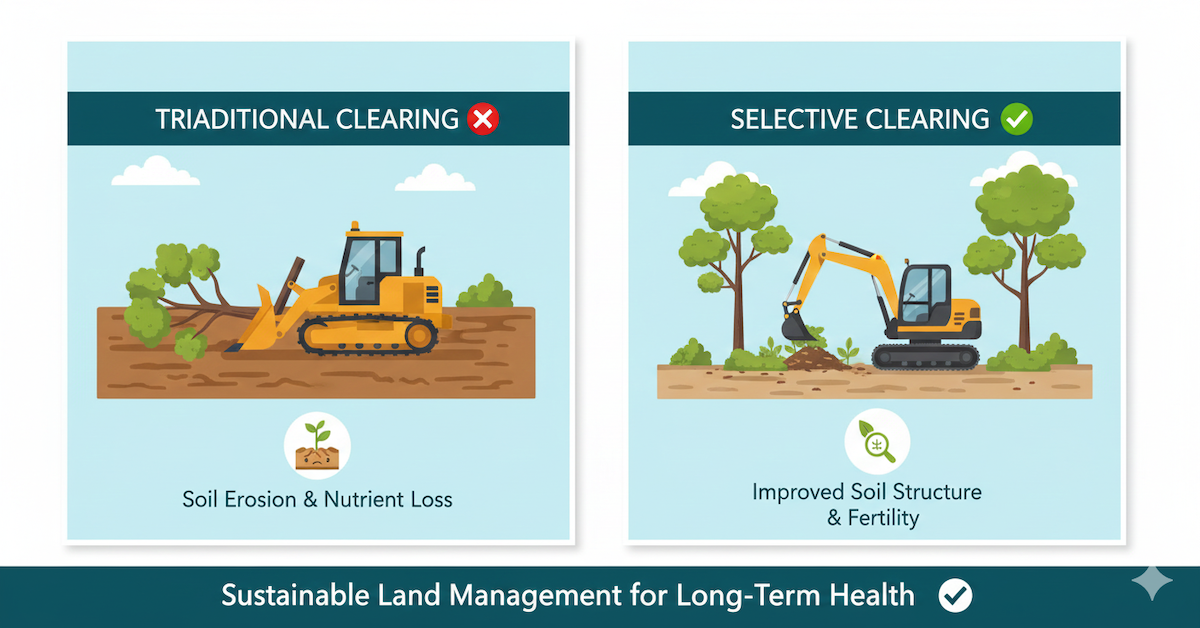
Land clearing is an important step in preparing a property for construction, farming, or new landscaping. While the process focuses on removing trees, brush, and debris, many people do not realize how much land clearing can influence the health of the soil beneath. Healthy soil provides nutrients, supports root growth, and prevents erosion. Poorly managed clearing, however, can weaken the soil and make it harder for new vegetation to thrive. Understanding how land clearing affects soil conditions helps homeowners choose the right approach for their property.
Some clearing methods can improve long term soil health by opening space for new growth. Other methods may create short term challenges such as compaction or erosion. Because every property has different soil types and environmental conditions, knowing the potential impacts helps you plan for better results.
Quick answer: Land clearing affects soil health by influencing compaction, erosion, nutrient levels, and organic matter. Responsible clearing methods protect topsoil, reduce damage, and help support long term soil fertility.
How Land Clearing Works and Why It Impacts Soil
Land clearing involves removing trees, shrubs, stumps, roots, and debris. This prepares the land for construction, planting, or improving access. The methods used can vary. Some clearing jobs use heavy machinery, while others rely on selective cutting or hand removal. Each approach has a different effect on the soil.
Heavy equipment can press down on the soil, reducing the air pockets that roots need for healthy growth. This is known as soil compaction. Compacted soil becomes harder for water to penetrate, which increases runoff and reduces the soil’s ability to support plants. On the other hand, selective clearing removes only the vegetation that is necessary, leaving much of the soil structure intact.
Clearing also affects soil because vegetation holds the topsoil in place. When trees and brush are removed, the soil becomes vulnerable to wind and rain. If the ground is left bare, erosion can strip away the most fertile layer. This layer is important because it contains organic material, nutrients, and microorganisms that help plants grow.
Positive Effects of Responsible Land Clearing
Although land clearing can cause soil issues if done improperly, a well managed clearing job can actually improve soil conditions. Removing overgrown vegetation allows sunlight to reach the ground, which helps new plants and grasses grow. Clearing space also encourages the roots of new vegetation to expand, improving oxygen flow and increasing soil stability.
Clearing invasive species is another benefit. Some invasive plants affect soil chemistry or drain moisture from the ground. Removing them gives native plants a better chance to grow and strengthens the soil ecosystem.
Land clearing also helps prepare the soil for planned improvements. For example, adding mulch or compost after clearing restores nutrients and enhances soil fertility. By working with the natural environment, clearing can create healthier conditions for future landscaping or construction projects.
Negative Impacts and How to Avoid Them
One of the most common concerns with land clearing is soil compaction. Heavy machinery presses the soil together, lowering its ability to absorb water. This can lead to pooling, drainage issues, and weak root development. Compaction also reduces oxygen levels in the soil, which affects microbial activity and slows down natural decomposition.
Erosion is another potential issue. Without vegetation to hold the soil in place, heavy rain can wash away the top layer. This reduces fertility and makes the soil more vulnerable to further damage. Areas with slopes are especially at risk.
Disruption of microorganisms is also important to consider. Soil is full of beneficial bacteria, fungi, and insects that help break down organic matter. These organisms maintain soil structure and nutrient levels. When the topsoil is disturbed too much, this natural balance can weaken.
Most of these problems can be prevented through careful planning. Using lighter machinery, limiting the number of passes across the land, and protecting key areas of vegetation help reduce damage. Another effective method is to leave a layer of mulch or wood chips on the ground after clearing. This layer protects the soil surface and supports moisture retention.
Best Practices for Protecting Soil During Land Clearing
A professional clearing service evaluates the site to determine the safest and most effective way to clear the land. Selective clearing is one of the best practices because it removes only the vegetation that needs to go, reducing the amount of disturbance to the soil.
Another helpful technique is using machinery with tracks instead of wheels. Tracked machines distribute weight more evenly, reducing compaction. Clearing crews may also create designated travel paths to keep machinery from spreading impact across the entire property.
Once clearing is complete, adding organic materials helps restore soil health. Mulch, compost, and shredded vegetation can be spread across the surface to provide nutrients and protect topsoil. Planting cover crops or fast growing grasses is another effective strategy for stabilizing the soil and preventing erosion.
Proper grading is also important. This ensures water flows in the right direction and does not wash away soil. Grading helps manage runoff, especially on sloped properties.
Conclusion
Land clearing plays a significant role in the future health of your soil. When done responsibly, it opens new opportunities for growth and supports healthier landscapes. When performed without planning, it can create problems such as compaction and erosion. Understanding how clearing affects soil helps you make informed decisions about your property. With the right techniques and professional guidance, land clearing can prepare your land for long term use while preserving its natural strength.
If you want land cleared with care for both your property and the environment, Sawvell Tree Service provides professional clearing that protects soil health and prepares your land for safe, successful development. Their experienced team uses responsible methods that support long term landscape stability and growth.