

Can a Tree Stump Regrow into a Tree After Grinding?
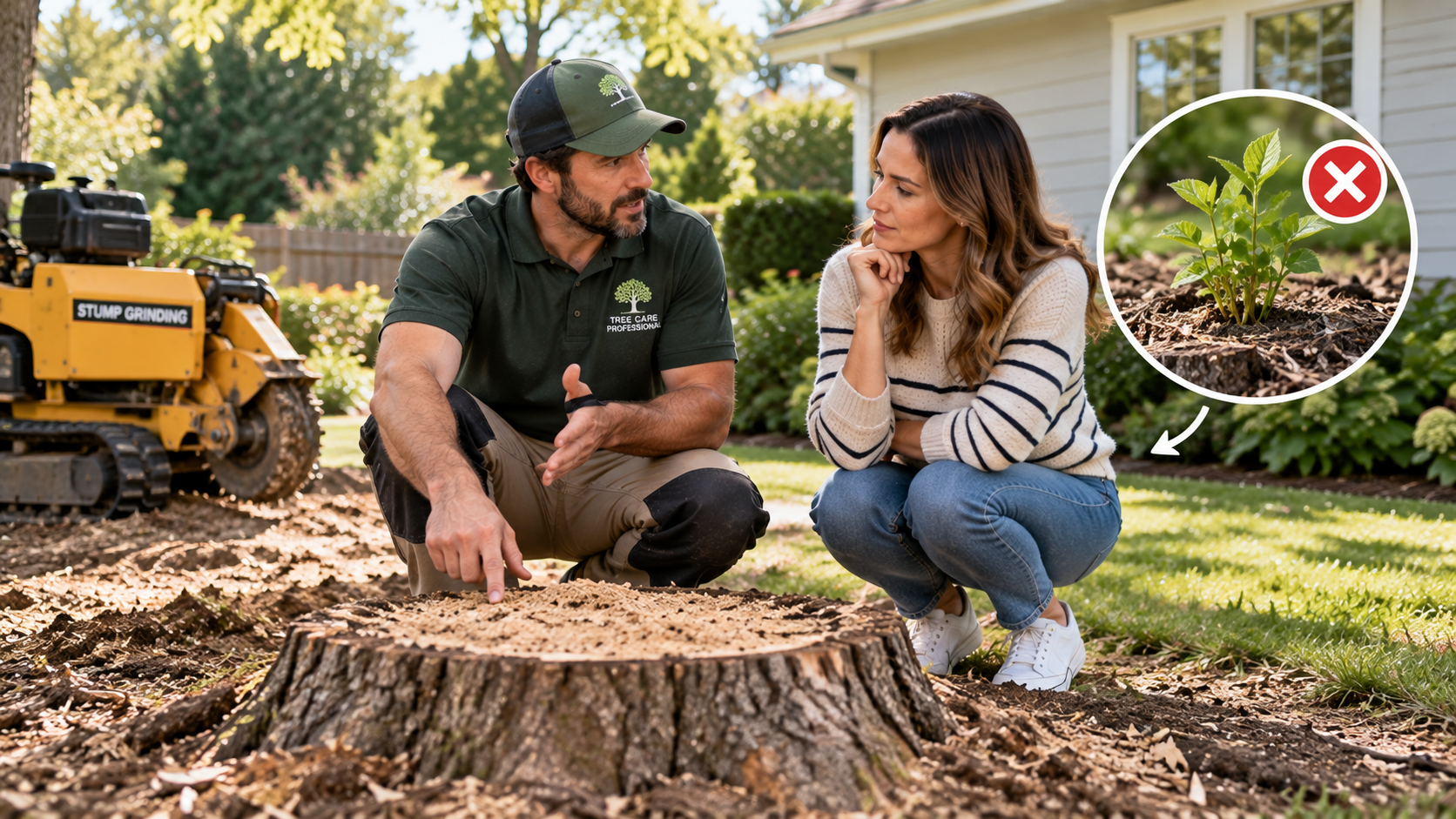
Stump grinding usually looks final. The trunk is gone, the grinder reduces the visible base to chips, and the yard is left with a low spot instead of a solid stump. That makes it reasonable to assume the tree cannot return. In many cases, that is exactly what happens, but some tree species are much better than others at producing new shoots after the main stem has been cut.
The important detail is where the new growth comes from. Grinding destroys the central stump wood in the treated area, but it does not normally excavate every root extending through the soil. If living roots or parts of the root collar remain, certain trees can use stored energy and dormant buds to send up sprouts near the old stump or farther out along the root system.
Quick Answer: A ground stump usually does not rebuild the original trunk, but some tree species can produce new shoots from living roots or remaining root collar tissue after grinding. Deeper grinding and complete removal of the central stump reduce the chance of regrowth, but they do not always kill the entire root system. If sprouts appear, they can be managed separately until the remaining roots lose the ability to support new growth.
What Exactly Does Stump Grinding Remove?
A stump grinder uses a rotating cutting wheel to chip away the remaining trunk base and upper root flare. The machine works below the surrounding ground surface so the visible stump no longer blocks mowing, planting, or normal use of the area. The grinding depth depends on the equipment, site access, stump size, and what the homeowner plans to do with the space afterward.
Sawvell Tree Service provides professional stump grinding with commercial-grade equipment to reduce unwanted stumps and leave a cleaner landscape. Grinding is different from full stump and root excavation. The widespread structural roots remain in the soil and gradually decay over time.
That is why a ground site may still contain substantial woody material underground even when the surface looks finished. Most of those roots simply decline after the canopy is gone, but sprouting species can sometimes stay active long enough to push out new shoots.
Can the Original Stump Grow Back After It Has Been Ground?
The original trunk does not normally reform from wood that has been mechanically ground away. Once the central stump is reduced below grade, there is no intact trunk waiting to rise again. What homeowners sometimes call the stump growing back is usually new vegetative growth coming from living tissue that remained outside the ground area.
Trees can carry dormant buds around the root collar and, in some species, along roots. When the main trunk is removed, those buds may become active because the root system still contains stored carbohydrates and water. The result can look like small trees emerging around the former stump.
This response is one reason tree removal and cleanup and stump grinding should be treated as related but separate steps. Removing the trunk eliminates the standing tree, while grinding handles the base. Root behavior continues underground after both jobs are complete.
Which Trees Are More Likely to Send Up Sprouts?
Sprouting ability varies widely by species. Some deciduous trees are naturally good at regenerating after injury, while many conifers are poor stump sprouters once the trunk is removed. Age, season, root condition, soil moisture, and how much living root collar remains also influence what happens.
Willows, poplars, some maples, elms, locusts, and other vigorous species are often associated with root or stump sprouts. The exact response should be identified by species rather than assumed from appearance alone. A certified arborist can help determine whether new shoots are likely to be connected to the old root system or are unrelated seedlings.
Even a species known for sprouting does not always regrow. If the tree was severely declined before removal, the roots may have too little stored energy to sustain new growth. Conversely, a healthy tree removed for location or structural reasons may have a vigorous root system capable of producing repeated shoots.
Does Grinding Deeper Prevent Regrowth?
Grinding deeper can reduce the amount of living tissue left around the stump and make sprouts directly at the old base less likely. It also creates more room for soil replacement, lawn restoration, or other landscaping. However, grinding deeper does not remove every root that extends beyond the machine area.
If a species can sucker from roots, new shoots may appear several feet away from the original trunk. Those roots may be well outside the practical grinding zone. This does not mean the grinding failed. It means the tree is using a biological survival strategy from tissue that was never meant to be excavated.
The expected finished use should be discussed before the job. Grinding for a lawn repair may require a different depth and cleanup approach than preparing the site for a new planting or construction feature.
How Long Can Roots Keep Producing New Shoots?
There is no fixed timeline. Roots lose energy after the canopy is removed because they no longer receive a continuing supply of sugars from leaves. Repeatedly removing new sprouts prevents those shoots from rebuilding a full canopy, so the remaining root system generally weakens over time.
Some vigorous species can keep trying for more than one growing season, especially when the roots are healthy and the soil conditions are favorable. The frequency usually declines as stored energy is depleted. Patience and consistent control are often more important than expecting one cleanup visit to eliminate every possible shoot.
If regrowth is unusually persistent or appears across a wide area, an arborist can identify the species and discuss targeted options. The right response depends on whether the goal is simply to stop sprouts, prepare for replanting, or protect nearby desirable vegetation.
What Should You Do if Sprouts Appear After Grinding?
Start by confirming that the shoots are connected to the removed tree. Seedlings from nearby trees can appear in disturbed soil and may look similar when small. Once root sprouts are identified, remove them while they are young so they do not develop enough leaf area to replenish the root system.
· Cut or remove new shoots promptly rather than letting them become woody stems
· Watch the former root zone during the growing season for additional sprouts
· Avoid damaging nearby desirable plants while managing regrowth
· Ask an arborist about persistent species that continue producing suckers
· Plan replanting only after considering remaining roots and soil conditions
Avoid pouring household chemicals, fuel, salt, or other unapproved substances into the stump area. They can damage soil and nearby plants without providing a reliable solution. If chemical control is appropriate, use a product and method recommended for the specific situation and follow the label and local requirements.
Can You Plant a New Tree Where the Old Stump Was Ground?
It is possible, but planting directly in the exact old stump location is often inconvenient. Remaining roots, wood chips, settling soil, and a large concentration of decomposing wood can make it harder to create a stable planting hole. Moving the new tree a reasonable distance away is often easier and gives the new root system better soil.
If the old tree was removed because the location was too close to a house, driveway, utility, or other structure, do not repeat the same spacing problem. Choose a species whose mature canopy and root needs fit the available area.
Sawvell offers a broader range of tree care services, so removal, grinding, pruning, and future tree planning can be considered together instead of treating each step as unrelated work.
Does Stump Grinding Remove the Risk of Insects or Decay?
Grinding removes the large visible stump that can stay solid for years and become a landscape obstacle. The underground roots still decay naturally, and that process is normal. Wood-decomposing organisms will continue working on the remaining material as it breaks down.
The site should be restored so water does not collect in a deep depression and excess grindings do not overwhelm the soil where grass or new plants are expected to grow. The appropriate amount of chip removal depends on the final use.
The company also uses specialized equipment across tree removal operations, including stump grinders for the base left after a removal. The machine handles the physical stump efficiently, while the longer root-decay process happens naturally below ground.
Should Stump Grinding Be Done at the Same Time as Tree Removal?
It is often convenient to plan both services together, but stump grinding may be scheduled as a separate step depending on equipment access and the scope of the job. Discussing both at the estimate stage helps avoid surprises about what will remain after the trunk is removed.
A typical tree removal timeline includes cutting, processing, hauling debris, and site cleanup, while stump grinding adds another operation. Large or complicated trees may require additional equipment before the stump can even be reached safely.
On difficult sites near buildings, crane assisted removal may be used to control the standing tree first. Once the overhead hazard is gone and the work area is clear, the stump can be addressed according to access and the homeowner's restoration plan.
When Should You Ask for Professional Help With Regrowth?
Professional help is useful when sprouts keep returning, the species is unknown, roots are appearing in several parts of the yard, or the old tree was removed because of a disease or structural problem that affects replacement decisions. It is also wise to ask before using herbicides near desirable trees, gardens, wells, or drainage areas.
For properties with multiple mature trees, North Shore tree care can help separate a simple stump issue from a broader tree management concern. Root sprouts from one removed tree may be easy to control, but similar symptoms around neighboring trees can point to a different situation.
The main point is that occasional sprouts do not mean a new full-sized tree will automatically return. They are a response from living roots, and they can be managed while the old root system declines.
Frequently Asked Questions
These are the most common questions homeowners have after the grinder leaves and the old stump is no longer visible.
Can a tree grow back from roots after stump grinding?
Yes, some species can send new shoots from living roots even after the central stump is ground. Those shoots are not the old trunk returning, but they can develop into new stems if they are allowed to grow.
Does stump grinding kill all the roots?
No. Stump grinding removes the central base and part of the upper root flare, but most widespread roots remain in the soil. They usually decay over time after the tree canopy is gone.
How deep should a stump be ground?
The right depth depends on the stump, equipment access, and what will happen in the area afterward. A lawn repair may need less preparation than a new landscape bed or construction project, so the finished use should be discussed before grinding.
Will mowing over new sprouts stop them?
Regularly cutting young sprouts can prevent them from developing a new canopy and gradually reduce the root system's energy. Persistent species may require additional management if shoots keep appearing outside the mowed area.
Can I plant grass over a ground stump?
Yes, after excess wood chips are managed and the depression is backfilled with suitable soil. Some settling can occur as remaining roots and wood decompose, so the area may need additional soil later.
Conclusion
A tree stump does not normally rebuild itself after grinding, but some species can send new shoots from living roots or root collar tissue that remains outside the ground area. Those sprouts are manageable and usually become less vigorous as the old root system loses stored energy.
Sawvell Tree Service can grind the remaining stump after tree removal and explain what to expect from the site afterward. If you want a clean area for lawn, landscaping, or future planting, discussing the finished use before grinding helps produce the best result.