

What Is Included in Professional Stump Grinding Services?
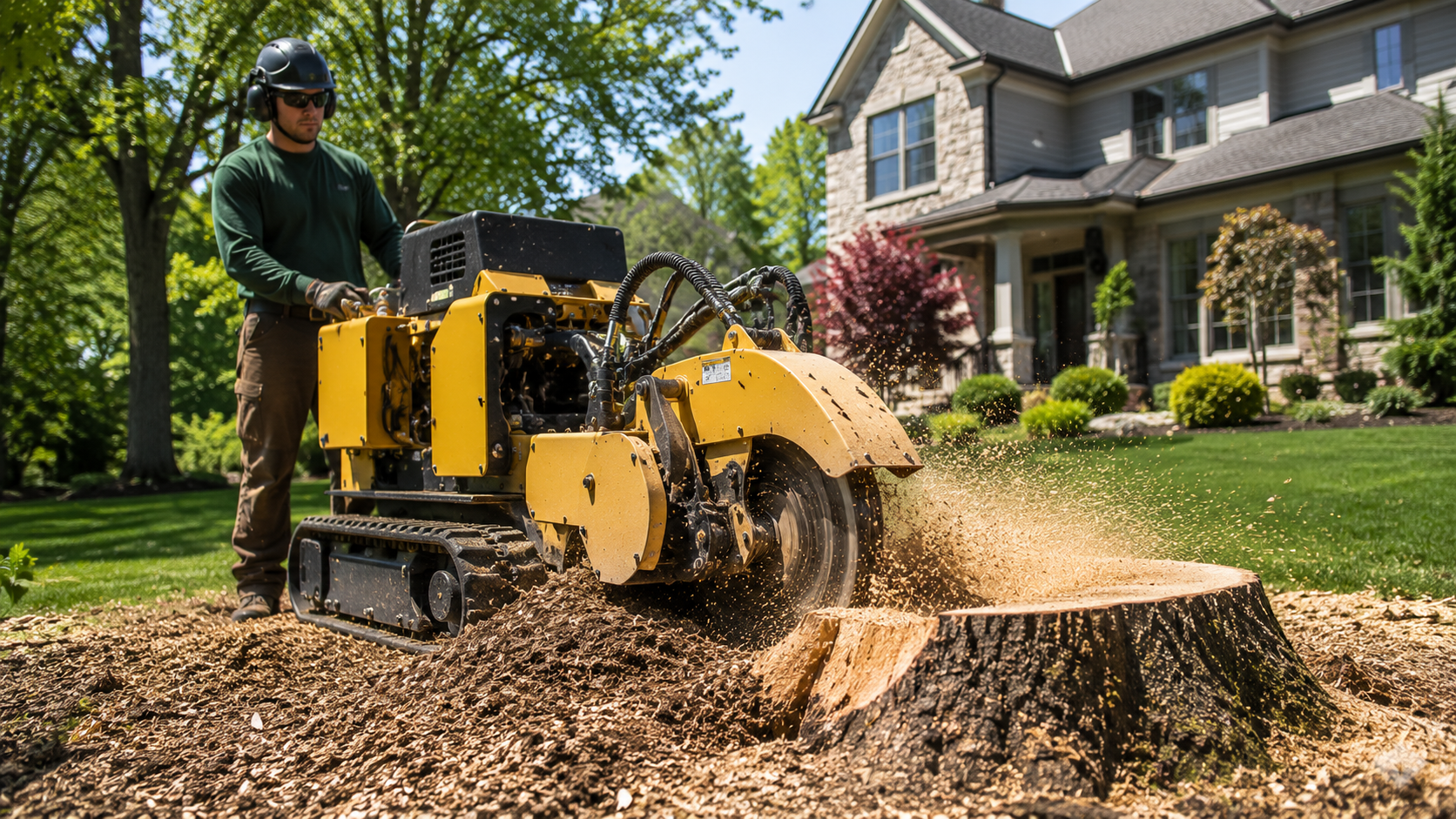
After a tree comes down, the stump left behind can sit in the yard for years without anyone being quite sure what to do with it. It is not urgent. It is not dangerous. But it takes up space, creates a mowing obstacle, looks unfinished, and, as discussed by anyone who has had pest issues, it is not entirely benign either. When homeowners finally decide to deal with it, stump grinding is the most practical and widely used solution.
What exactly happens during a professional stump grinding service is not always clear from the outside. The machine is brought in, something happens, and the stump is gone. But there are specifics about what is covered, how deep the grinding goes, what happens to the wood chips, and what the site looks like afterward that are worth understanding before the crew arrives.
Quick Answer: Professional stump grinding services typically include site assessment, protective covering of surrounding grass and landscaping, grinding the stump and root flare to a minimum of six to twelve inches below ground level, and removal or spreading of the resulting wood chip material. The hole created is usually filled with the chips, or they can be removed from the property. Most services include raking the area clean before leaving.
What Happens Before the Grinding Starts
A professional stump grinding crew begins with a quick site assessment before bringing in equipment. This covers the stump dimensions, the likely depth required, any underground utilities near the stump, nearby landscaping or structures that need protection, and access for the machine. Stump grinders range from compact walk-behind units that can fit through a standard gate to large ride-on units that require more open access.
Before grinding begins, the area immediately around the stump is typically cleared of debris, rocks, and any decorative stones that could become projectiles during the grinding process. A ring of plywood or protective sheeting may be placed around the perimeter if there is landscaping, fencing, or structures that could be affected by flying chips.
Calling JULIE, Illinois' free underground utility locating service, to mark underground lines before grinding is standard practice for a professional crew. This is not optional: stump grinding machines reach several inches below ground, and stump grinding services that skip this step create unnecessary risk of damaging irrigation lines, electrical conduit, or gas lines.
The Grinding Process Itself
The grinding head on a stump grinder is a rotating disc with carbide cutting teeth that chips the wood into small pieces. The operator works the head across the stump in a methodical pattern, moving side to side and progressively deeper. A typical stump is ground to six to twelve inches below the soil surface, which destroys the main trunk, the root collar, and the visible surface roots.
The grinding depth requested or included in the service matters for what you can do with the area afterward. Six inches below ground is sufficient for most lawn uses: the wood chips in the hole will decompose over two to three years and the area can be used for grass. Deeper grinding of twelve inches or more is needed if you want to plant a tree or large shrub in the same location.
The distinction between grinding differs from full stump removal is important here: stump grinding destroys the stump and visible root flare to below ground level, but it does not remove the roots that extend outward through the soil. Those roots will decay naturally over the coming years.
What Happens to the Wood Chips
Stump grinding produces a significant volume of wood chips and sawdust. For a medium-sized stump, this can be one to three cubic yards of material. How this material is handled is one of the variables in what a service includes.
The most common arrangement is to use the chips to fill the resulting hole, then rake the surface level. The chips decompose over time and the slight depression that remains can be top-dressed with additional soil and seeded once the initial settling occurs. This approach requires no off-site disposal and is included in most standard grinding quotes.
If the chips are not wanted, they can be hauled away. Some companies include this; others charge an additional fee for disposal. Chips can also be spread as mulch around other trees or garden beds, which is a practical use that avoids disposal cost entirely. Confirming what the service includes for chip handling avoids surprises about what is left on the property after the crew departs.
Site Cleanup After Grinding
A professional stump grinding service should leave the area in a clean, tidy state. This means raking the chip material into the hole, levelling the surface, and clearing any stray chips from the surrounding lawn. The machine can throw chips a short distance during operation, and a thorough rakedown of the immediate area is part of a complete service.
Understanding what stump grinding typically costs helps in evaluating whether a quote includes full cleanup or whether extra effort is needed to get the site back to a clean state before the crew leaves.
What Stump Grinding Does Not Include
It is worth being clear about what professional stump grinding does not cover. It does not remove the root system below the grind depth. Those roots will decay in the ground over several years. If roots are causing specific problems, such as lifting a driveway or invading a drainage system, when root removal is needed alongside grinding is a separate service that may be recommended.
Stump grinding also does not guarantee that a tree will not produce sprouts from the remaining root system. Some species, particularly elms, cottonwoods, and certain oaks, have root systems capable of producing new growth even after the stump is ground. If this is a concern, a post-grinding soil treatment with a growth inhibitor can address it.
What to Do With the Site After Grinding
The most common question after stump grinding is what to do with the ground-out area. Homeowners who want to plant in the ground spot after grinding should allow the chips to settle and begin decomposing for a few months, then remove the remaining chip material from the top few inches and replace with good topsoil before planting.
For areas that will be returned to lawn, the chips can be left in place, the surface dressed with topsoil, and the area seeded after the initial settling. It typically takes one to two growing seasons for the ground to fully stabilise and for a new grass surface to establish evenly over the former stump location.
Frequently Asked Questions
How deep does professional stump grinding go?
Standard stump grinding typically reaches six to eight inches below the soil surface, which is adequate for lawn use. If you plan to plant a tree or large shrub in the location, requesting a depth of twelve inches or more is advisable. Some companies charge more for deeper grinding.
How long does stump grinding take?
A single average stump typically takes 30 to 60 minutes to grind. Larger stumps or very hard wood species can take longer. Multiple stumps on the same property are more efficient per stump because the equipment is already on site and moving between stumps takes less time than the initial mobilisation.
Can stump grinding damage nearby tree roots?
Stump grinding close to other trees does carry some risk of cutting surface roots of adjacent trees if those roots run through the grinding area. An experienced operator will identify visible surface roots and adjust the grinding approach accordingly to minimise impact on trees that are intended to stay.
Do I need to do anything to prepare for a stump grinding appointment?
Clear the area around the stump of any loose rocks, garden ornaments, or landscaping items that could be affected by flying chips. Make sure the grinder has a clear access path from the street or driveway. If there is a gate, confirm the width is adequate for the machine being used.
Will the wood chips attract pests or disease?
Fresh wood chips from a healthy tree do not attract pests and are safe to leave in the ground. If the stump being ground had a disease or fungal issue, some professionals recommend removing the chips rather than leaving them in place, as the pathogen may remain active in decomposing material.
The Bottom Line
Professional stump grinding covers site assessment, utility marking, the grinding itself to below ground level, and cleanup of the resulting wood chips. Understanding what is and is not included helps homeowners know what to expect on the day and what preparation the site needs afterward.
Sawvell Tree Service provides professional stump grinding services throughout Lake County and the North Shore, with experienced operators and a thorough cleanup standard. If you have a stump that needs dealing with, get in touch for a straightforward assessment and quote.