

How Do I Know If My Tree Is Dying or Just Dormant?
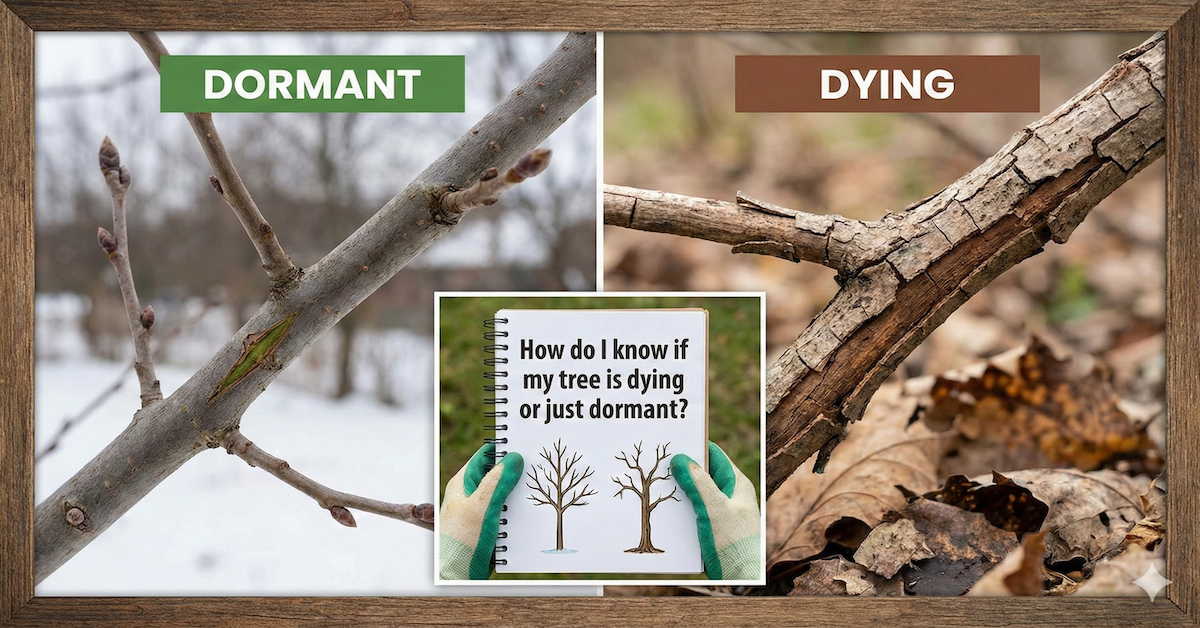
Trees change throughout the year, and many homeowners worry when they see bare branches, fallen leaves, or slow growth. It can be difficult to tell whether a tree is simply going through its natural dormant cycle or facing serious health problems. Dormancy is a regular part of a tree’s seasonal rhythm, but disease, pests, or structural decline can create similar signs. Knowing the difference helps you protect your landscape and avoid unnecessary removals.
Understanding how a healthy tree behaves during dormancy makes it easier to recognize when something is wrong. Seasonal dormancy looks predictable, but a dying tree often shows signs that go beyond normal winter rest. When you know what symptoms to watch for, you can take action early and prevent safety risks or property damage.
Quick answer: A dormant tree will show normal seasonal changes such as bare branches, slower growth, and a stable trunk, while a dying tree often has brittle limbs, peeling bark, fungus near the base, no new buds, or visible decay. Dormancy is temporary and predictable, but decline comes with progressive symptoms.
What Normal Dormancy Looks Like
Dormancy is a period when trees slow their growth to conserve energy. Most trees enter this stage during cold months when sunlight is limited. A healthy dormant tree may lose its leaves and appear still, but its inner tissue remains alive. The cambium layer under the bark stays moist and flexible, even when external growth pauses.
Branches on a dormant tree typically look firm, and the bark remains intact. As the season transitions, you may see small buds forming, which is a strong sign the tree is resting, not dying. The structure of the tree remains stable, without cracks or odd leaning. If the tree has gone dormant before, the pattern will look familiar year after year.
Common Signs That a Tree Is Dying
A dying tree shows symptoms that do not follow a seasonal pattern. One of the earliest signs is brittle branches. When branches snap easily and show no green tissue inside, the tree may be losing vitality. Peeling or splitting bark also indicates stress or decay. A healthy tree rarely sheds bark in large pieces, but a dying tree often shows deep fissures or open areas on the trunk.
Lack of new buds is another concerning sign. Even in dormancy, you should see small buds forming along the branches. If a tree has no budding at all by early spring, it may be declining. Fungus growing near the base of the trunk is a strong indicator of internal decay. Mushrooms or shelf like growths often signal rot inside the tree, which weakens its structure and stability.
Another sign is a thinning canopy. If the tree has bare patches or fewer leaves each year, it may be struggling. Trees that lean suddenly or show exposed roots may also be in serious decline.
Simple At Home Tests to Check Tree Health
If you are unsure whether a tree is dormant or dying, there are a few safe tests you can try. The scratch test is one of the simplest methods. Gently scratch a small section of a thin branch using your fingernail or a clean tool. If the layer beneath is green and moist, the tree tissue is alive. If it is brown and dry, that branch may be dead.
Another method is the bend test. Small branches on a healthy, dormant tree should bend before breaking. If they snap instantly, the tree may be losing vitality. You can also examine the soil. Trees struggling with drainage issues may show signs of stress. If the soil is overly dry or consistently waterlogged, the tree may be affected.
Finally, observe the trunk closely. A stable trunk should feel firm with steady bark texture. If you see drill holes, cracks, or hollow areas, the decay may be more advanced.
Environmental Factors That Can Mimic Decline
Sometimes trees show temporary stress that does not mean they are dying. Drought, extreme heat, early frost, or heavy storms can cause leaf drop or browning. These symptoms may look alarming but often resolve when the environment improves.
Overwatering can also cause yellowing leaves or wilting. Poor drainage may lead to root stress, which affects foliage long before the roots fully recover. In these cases, the tree may look unhealthy but is not necessarily dying.
Nutrient deficiencies in the soil can change leaf color or reduce growth. A soil test can confirm whether the tree needs better nutrition rather than intervention for disease or decline.
Understanding these external influences helps prevent misdiagnosis and unnecessary removals.
When to Call a Certified Arborist
You should contact a professional if several concerning signs appear at once. Brittle branches, fungus growth, trunk cracks, and missing buds together often mean the tree needs expert evaluation. A leaning tree or one with visible root exposure should always be inspected quickly due to safety risks.
Large trees near homes, driveways, or walkways also require professional assessment if they show signs of decline. Weak or damaged trees can fall unexpectedly, causing property damage or injury.
An arborist can determine whether the tree can be treated, pruned, or stabilized, or whether removal is the safest choice. Early diagnosis increases the chances of saving the tree.
Conclusion
Understanding the difference between dormancy and decline helps you make the right decisions for your landscape. While seasonal changes are normal, symptoms such as brittle branches, peeling bark, rotting roots, and lack of new buds often indicate deeper problems. Paying attention to these signs protects your property and ensures your trees stay healthy and stable throughout the year.
If you need help diagnosing a tree or want a professional evaluation, Sawvell Tree Service is here to assist. Our team provides expert inspections, safe tree care, and reliable solutions to keep your property protected and your trees thriving.